Recap: 2016 Grand Taste Tour with Northlands Urban Farm, Brix ‘N Berries, Triple M Dairy and Tangle Ridge Ranch

At the end of July, Mack and I were honoured to be asked to be among the hosts of the third annual Grand Taste Tour. It was the second year of the event where attendees were bussed to the various farm locations, as opposed to a self-guided tour. This allows participants to meet and break bread with other folks interested in learning about local agriculture, all while taking advantage of more efficient group-based transportation.

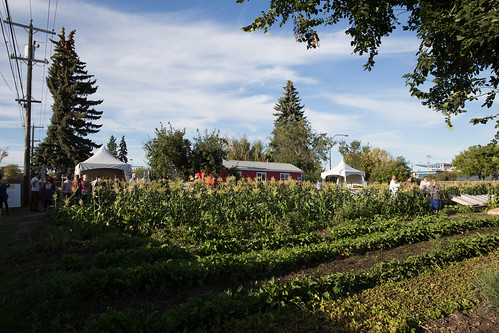
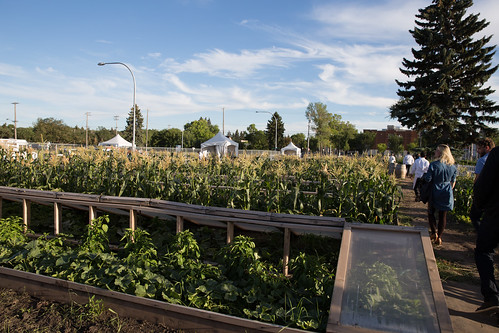
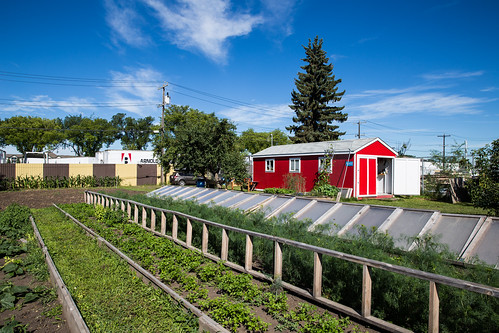
Linda and Brittney headed up one bus, while Mack and I led another. The first stop was within city limits – a one acre lot cultivated in partnership with Northlands. The farm is a part of the Northlands Urban Farm, intended for educational purposes and to support innovative practices. 600 students from local schools have already toured the farm this year, and 26 children will be selected to take part in their junior beekeeping pilot this fall. Northlands also successfully applied for an urban chicken permit which will allow them to add eight hens to the property.
Grand Taste Tour 2016

Northlands Urban Farm

We spent some time with Travis Kennedy of Lactuca, whose crops make up most of the one acre. His enthusiasm and pragmatism make him a wonderful urban agriculture ambassador. While Lactuca began its business in a backyard garden, it now has the chance to produce 200-300 pounds per week at Northlands. New challenges have come with that opportunity in the form of supply exceeding demand, so much of his focus this year has been on developing new markets for their products. Lactuca currently supplies to 15 restaurants in Edmonton and area, including Farrow and Three Boars.
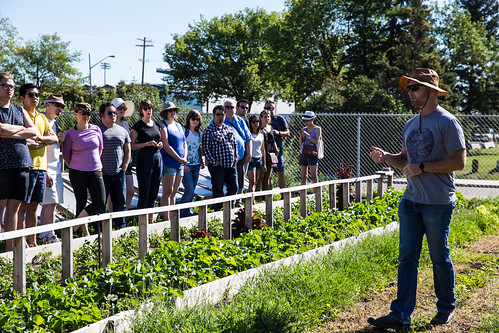
Grand Taste Tour 2016

Travis

Salad greens (primarily kale, lettuce and arugula) make up most of the crop. The reason these were chosen relates to their short 7 day production cycle to make the most of Edmonton’s 100 growing days, their lightweight nature (Travis used to transport his crop to farmers’ markets on a bicycle), and that all restaurants have a salad on their menu, increasing his market potential. That said, greens require an incredible amount of water to flourish – on hot days, Lactuca can use up to 7000L of water. Northlands was permitted to run below-ground water lines to help with this.

Although Lactuca does experiment with other crops (corn and French fillet beans, to name a few), they’ve embraced salad greens because they want to stay true to seasonality. They haven’t ruled out hydroponics in the future though, so stay tuned!

Lactuca relies on organic practices, using City of Edmonton compost, and Travis doesn’t mind the holes he finds among the leaves. He believes it speaks to their terroir and lack of pesticide use. That said, he recognizes that what may sell to consumers at a farmers’ market will not pass inspection with restaurants (pointing out the odd dichotomy between the success of “ugly produce” campaigns and the unchanged expectations of diners eating out).
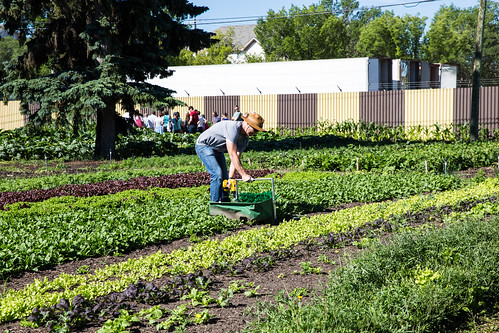
Grand Taste Tour 2016

Demonstrating the drill-powered harvester

I was particularly amazed by the method in which they now harvest their greens. When Travis started, they relied exclusively on hand-harvesting, which is laborious and time consuming. They’ve since moved to using a drill-powered aluminum harvester, which can harvest up to 150 pounds an hour.

The group then listened to Patti Milligan, who is the beekeeper for urban hives at Northlands and the Shaw Conference Centre.

The hives at Northlands are kept primarily for educational purposes. Patti explained that Alberta is the largest honey producer in the country, due to the abundance of sunlight and flowers. In our province, clover, alfalfa and canola dominate, but Patti did mention a movement towards manipulating where bees go through timing of blooms and placement of plants. She said we should watch out for locally-sourced borage, raspberry, fireweed, and dandelion honeys in the near future.

Grand Taste Tour 2016

Patti

It’s great to have such a rich resource centrally located in Edmonton, available for children and adults alike to learn about agricultural practices, especially when it is helmed by passionate connectors like Travis and Patti. Northlands is offering free public tours on September 10 – pre-registration is required.

Our second stop took us just outside of city limits to Brix ‘N Berries in Leduc County. Operated by Greg Moline and Laurie Erickson, Brix is primarily a berry u-pick garden, though they also offer limited vegetables as well.

Greg and Laurie do have off-farm income – their main work is in the area of soil amendments, assisting farmers who are looking to transition from using fertilizers to relying on other practices. They highlighted the difference between great soil and poor soil on their own land – a portion of their farm has naturally enriched number one grade soil (where they joked that seeds germinate even before they hit the ground). The Saskatoon bushes here grew without restraint, full and unwieldy. Across the field, bushes planted in the same year in sub-par soil struggled to fruit, branches spotty and inconsistent.
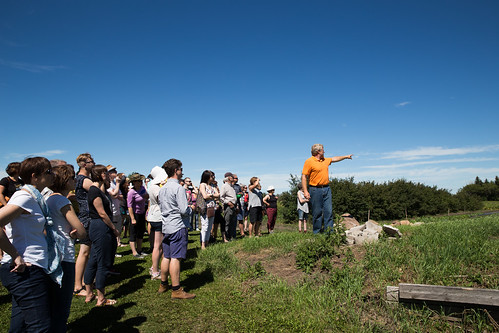
Grand Taste Tour 2016

Greg points out the number one grade soil

Brix began with 50 acres of Saskatoons, but soon added strawberries, raspberries, a greenhouse, then a market garden. Greg shared that it has been challenging for operations like theirs to stay in business without an agri-tourism component such as Prairie Gardens. Brix doesn’t charge an overhead for consumers to pick their produce because they just focus on growing food, and perhaps because of that, they can’t keep up with the demand. In the face of several other u-picks that closed this year (Roy’s Raspberries on a permanent basis and Happy Acres for 2016), Brix has had to close from Sundays to Tuesdays this season to allow the fields to regenerate. Even then, that previous Wednesday, they found that 250 people picked the field clean in a day.
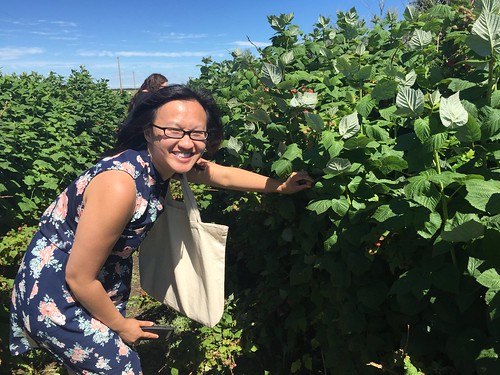
Brix 'N Berries

Linda picks some raspberries

My sisters and I, city children through and through, benefited from the u-picks we visited with our parents growing up. I’m not sure I would have been able to identify field-grown produce as a kid without those experiences, and through the relationship we had with the farmers, learned to appreciate how difficult it was to grow food for the masses. With development pressures and the work involved in maintaining a public farm, I’m sure more of these operations may fall by the wayside, but I really do hope the tide turns – these u-picks are a valuable community asset for the next generation.

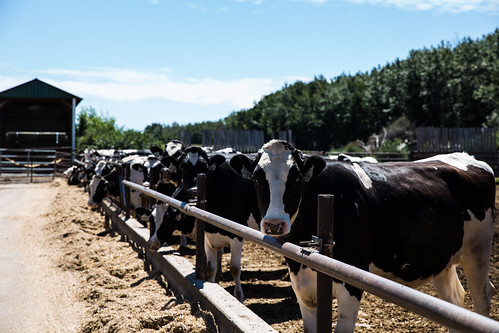
Our third stop was Triple M Dairy in Calmar. Genzinus Martins runs the farm along with his sons, comprised of 180 cows. Considered a medium-sized operation, they produce 1.3 million litres of milk per year sold through Alberta Milk.

Mack and I were fortunate to have toured Bles Wold a number of years ago, and had already seen an example of a mechanized milking machine. For many on our bus however, this was their first encounter with a machine that can milk up to 60 cows per hour. The technology also monitors the health of an individual cow through a transponder in their neck, tracking their production over a period of time. Most animals supply 40L of milk per day.

Grand Taste Tour 2016

Genzinus explains how the milking machine works

Genzinus was proud of their operation, as they are constantly striving to improve the health of their cows and ensuring the animals continue to produce for 4-5 years. Their cows get a two month break from milking every 12-13 months to wander the fields. He emphasized that Alberta Milk provides incentives for better quality milk, so farmers aren’t just driven by quantity alone.
Grand Taste Tour 2016

What are you looking at?

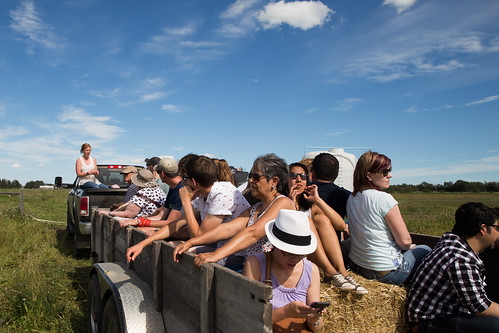
Our last stop was Tangle Ridge Ranch located in Thorsby. Vicky and Shane Horne are first generation farmers, and when they purchased 60 acres they knew they wanted to have a strong connection with consumers. Although they had experience with cattle farming, they wanted to start out with smaller animals, and thought they could find a niche with grass-fed lamb, a product not widely known in Alberta. 50% of lamb sold in the province is imported, something Vicky and Shane hopes will change in the years to come.
Grand Taste Tour 2016

The best kind of tour!

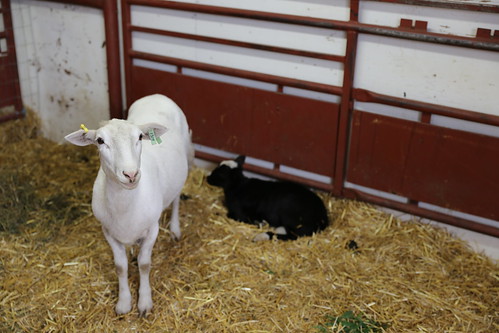
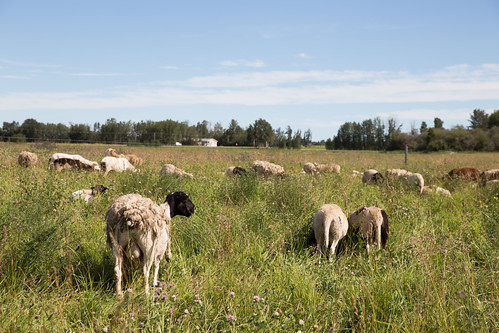
Vicky and Shane carefully selected the breeds of sheep they would raise. Katahdins and Dorpers are “hair” sheep that naturally lose their coats and thus don’t require regular shearing, with their energy going into meat instead. Without wool, believed to produce lanolin oil, the meat from these sheep breeds are much milder in flavour. Currently, Tangle Ridge raises 70 sheep per season, but want to eventually grow to a flock size of 250. They sell direct to consumers every fall through their website, and are now taking orders for November 2016.
Grand Taste Tour 2016

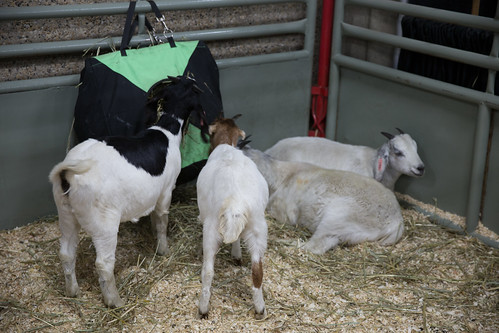
Hair sheep

The foundation of their farm is pasture management, as they believe healthy soil is the key to healthy animals. They seeded their land with a mix of alfalfa and clover, and manage with temporary fences for rotational grazing. A portable water truck follows the flock so the animals always have access to water.

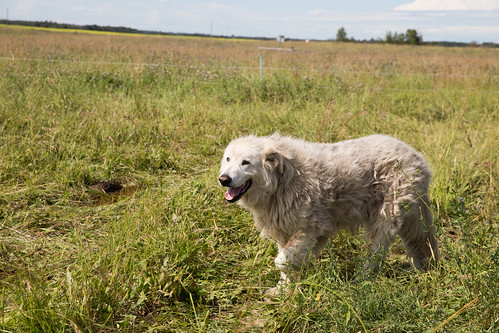
The story of Tangle Ridge Ranch wouldn’t be complete without mentioning their dogs. Virgo, Mojito and Bailey protect the sheep, circling them night and day to deter the coyotes in the area.
Grand Taste Tour 2016

A sheep dog in his element

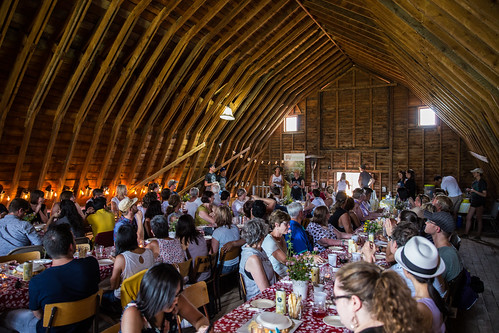
After the tour, all guests were ushered onto the second floor of the barn on the ranch. It’s been transformed into an event space that’s used for long table dinners and private functions. With the overhead lights and mismatched chairs, it was a rustic setting that befit the closing of the day.
Grand Taste Tour 2016

Barn dinner

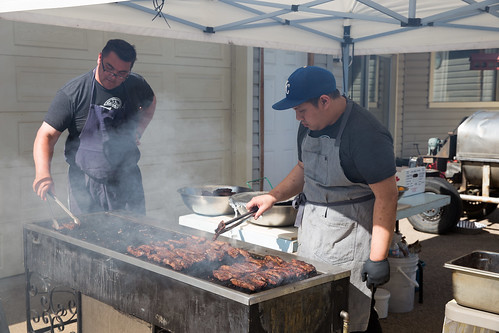
The food is where the Grand Taste Tour sets itself apart from other farm-related events. Whereas other events focus on either tours or meals alone, Grand Taste successfully marries both for an unmatched value. Last year, they brought in Chef Daniel Costa of Corso 32 fame. This year, not to be outdone, Chef Frank Olson from the Red Ox Inn and Canteen prepared a six course meal utilizing ingredients from producers we had met along the tour. This was also the first year where alcohol was available for purchase at dinner.
Grand Taste Tour 2016

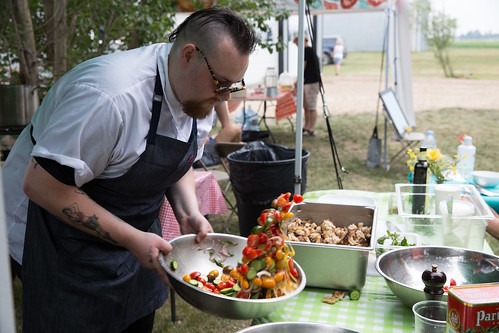
Chef Frank Olson and crew cooking up a storm

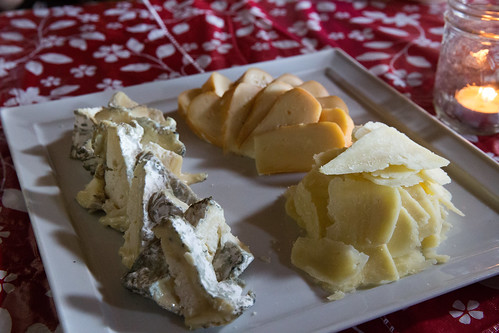
To start, we sampled three Winding Road cheeses, accompanied by a compote made from Brix ‘N Berries cherries, and Coal Lake Honey. Winding Road is a small cheesiry that began selling its products at the French Quarter Market this year.
Grand Taste Tour 2016

Winding Road cheeses

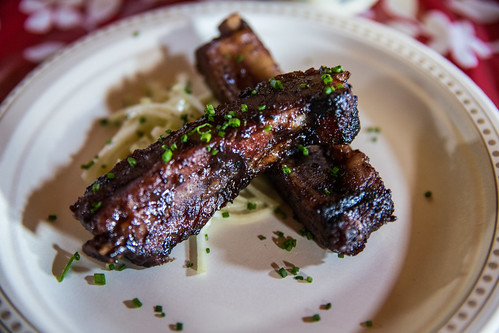
Pork ribs glazed with a Saskatoon berry barbecue sauce with an underlay of kohlrabi were up next, food meant to get your hands dirty.
Grand Taste Tour 2016

Pork ribs

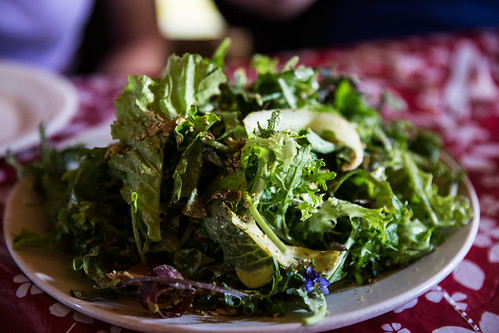
Lactuca and Sundog Organic supplied the vegetables in the salad course, made up of radishes, greens, carrots, pumpkin seeds and a green goddess dressing.
Grand Taste Tour 2016

Green goddess salad

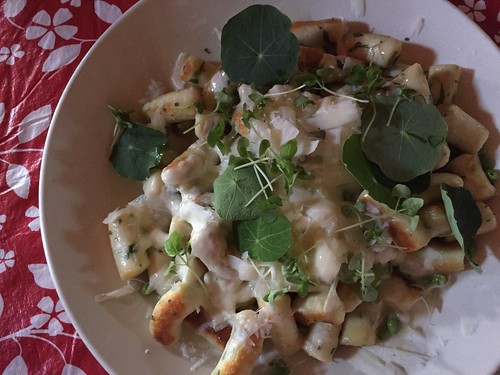
My favourite dish was the gnocchi, served with basil and tarragon from Reclaim Urban Farm, pecorino from The Cheesiry, and peas from Erdmann’s. Selfishly, I was thankful this had been served family-style, as some of my dinner companions chose not to eat their full share.
2016 Grand Taste Tour

Gnocchi

Many had been awaiting the main course – Tangle Ridge lamb was served two ways: cumin-scented meatballs, and slow roasted for 8 hours with horseradish and nettle. Perhaps it was the knowledge from the tour, but the meat was noticeably mild in flavour, outside of the spices imparted by the kitchen.

Grand Taste Tour 2016

Lamb served two ways

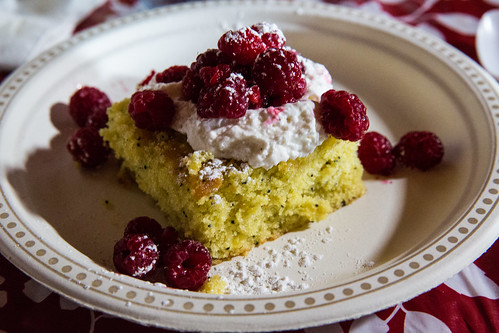
As if we weren’t full enough, the dessert course was too good to pass up, a glorious canola oil cake dolloped with whipped cream and Brix ‘N Berries raspberries.
Grand Taste Tour 2016

Canola oil cake

Thanks again to Kirsta, Amy and the rest of the Grand Taste Tour organizers for a fantastic day full of learning and great food. I’m looking forward to next year already.

Celebrating the International Year of Pulses with Alberta Pulse

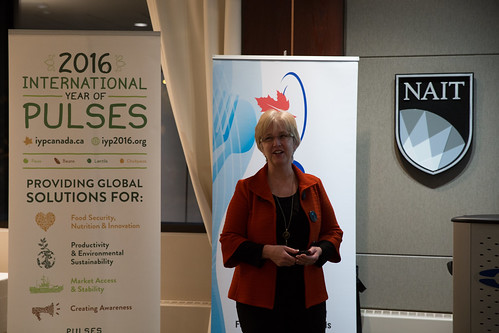
The UN General Assembly declared 2016 as the International Year of Pulses, highlighting their affordability, nutritional value and sustainability. As nearly 10% of Alberta’s crop acres are dedicated to growing pulses, it is a good time to promote this commodity at home.

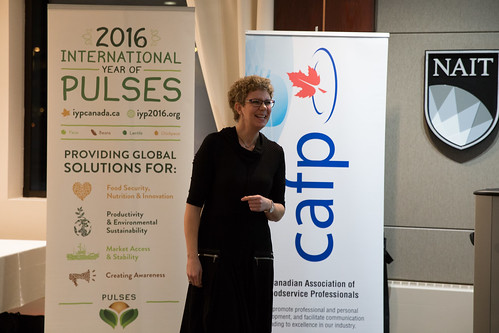
Mack and I were invited to attend a recent event hosted by the Canadian Association of Foodservice Professionals (CAFP) at NAIT celebrating this hallmark year for pulses. The CAFP is a national organization that represents chefs, hospitality representatives, food manufacturers and nutritionists, among others. Local branches host learning opportunities for their members, including visits to area food production facilities. In February, in collaboration with Alberta Pulse, the Edmonton branch explored the topic of pulses.

CAFP Alberta Pulse Dinner

CAFP at Ernest’s

It’s a subject I’ve been learning more about in the kitchen for a few years now. After reading Mark Bittman’s Food Matters more than five years ago (his mission was to encourage more conscious consumption of non-meat proteins), I was inspired to start including more beans and lentils in our diet. In 2011, Julie Van Rosendaal and Sue Duncan’s cookbook, Spilling the Beans, was released, becoming one of our go-to guides for meal inspirations. Now, pulses have just become a part of our regular rotation, both as a meat alternative but also to enhance soups, salads and mains, stretching the meal all while adding nutrients. At this point, our pantry and freezer would feel bare without having some variety of pulses on hand. CAFP Alberta Pulse Dinner

Allison Ammeter

That said, the presentations that evening were informative, especially to provide a local context. Farmer and chair of the Alberta Pulse Board, Allison Ammeter, shared the following:

  • Lentils fix their own nitrogen in the soil, meaning a reduced need for fertilizer when used as a part of a regular crop rotation;
  • Most pulses use less water, particularly peas and lentils, which is great for drought-prone regions; and
  • Pulses leave the soil better than it was – wheat grows better on pulse stubble.

Alberta grows a variety of pulses: primarily peas (green, yellow, marrowfat), but also beans (great northern, black, cranberry, pink, small red), lentils (red, green) and chickpeas. And though most are familiar with whole pulses, they can be purchased as flour products as well.

It’s also an unfortunate reality that it’s not easy to locate "product of Alberta" pulses. Unless it is packaged in the province, even locally-grown products end up with a broader "product of Canada" label. Perhaps in the grand scheme of things, it doesn’t matter if it lists the growing province, but it does make it more difficult for those hoping to source their food as locally as possible (thankfully in Edmonton, Gold Forest Grains does sell excellent organic red lentils). As the Minister of Agriculture was present that evening, I was hoping that some advocacy might have happened on the need for more production facilities in the province.

CAFP Alberta Pulse Dinner

Debra McLennan

Debra McLennan from Alberta Pulse shared some nutritional facts of pulses:

  • They are gluten-free and vegetarian;
  • They are low in fat, and protein-packed (curiously, in Australia, legumes are classified as a vegetable when a 1/2 cup is served, but as a meat alternative when 3/4 cup is served);
  • They are an excellent source of folate and are high in fibre; and
  • They are beneficial in reducing "bad" cholesterol.

Pulses are also relatively light on the wallet, costing significantly less when compared with meat sources of protein. In the context of rising food prices, affecting everyone from consumers at home to restaurant operators, this spotlight on pulses couldn’t come at a better time.

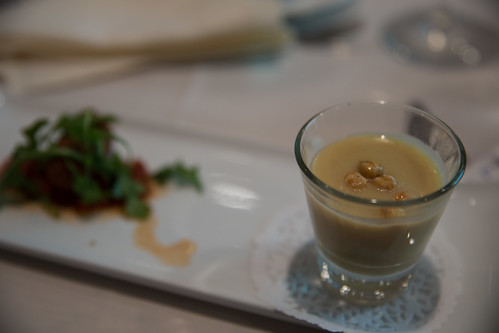
In collaboration with the chefs at Ernest’s, Debra designed the evening’s menu to highlight the many sides of pulses. To start, we enjoyed a duo of yellow split pea soup and a pork croquette which used a white bean purée to bind the meat.

CAFP Alberta Pulse Dinner

Duo of yellow split pea soup and pork croquette

The entrée was a pan-roasted chicken served with a lentil and rice pilaf. The chicken was very well-prepared, and the pilaf tasty enough, but it was a missed opportunity not to highlight pulses as the main event (Indian-inspired dal, or falafel, for instance).

CAFP Alberta Pulse Dinner

Pan roasted herbed breast of chicken

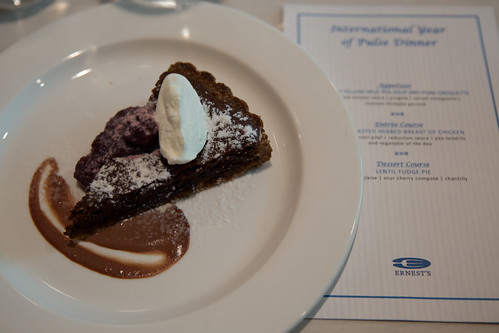
For dessert, we were treated to a lentil fudge pie. The pie incorporated a red lentil purée that could not be detected, taste-wise, and with the added nutrients, it’s almost a guilt-free dessert. That recipe can be found online at the Alberta Pulse website.

CAFP Alberta Pulse Dinner

Lentil fudge pie

If you’re interested in learning more about pulses, check out more recipes at pulses.org, and consider taking the pulse pledge – all it takes is committing to eating a half cup of pulses per week.

Thanks to the CAFP and Alberta Pulse for having us!

Farmfair, Burgers and My First Canadian Finals Rodeo

I have to admit, the idea of going to the rodeo has never appealed to me, even if I’ve always been curious about the excitement surrounding the Calgary Stampede, and in Edmonton, the Canadian Finals Rodeo. It is something quintessentially "Albertan", but has also seemed inaccessible to me without any personal ties to a tradition that can run generations deep for many in the province. So it took Mack being extended complimentary tickets to this year’s Canadian Finals Rodeo for me to finally learn what all the fuss was about.

We headed to Rexall Place on Friday to a nearly packed house, absolutely energized for the events to come. Confronted with such a crowd, it was the first time I realized the scale of the CFR’s economic boost for Edmonton – it was clear most taking in the event were visiting from out of town.

CFR 2015

My cowboy

I was thankful for the two commentators who made sure the audience remained engaged and entertained. They were also very inclusive, taking the time to explain some of the rules and nuances of the sport, much appreciated by a novice like me.

It was easy to see the amount of training each competitor had put in to get to this level, from cattle roping to barrel racing. The bull riding finale unfortunately only saw a handful of riders reach the eight second mark, but no question they all seemed to give it their all. I can also see how the CFR builds in excitement over the course of the week, as the audience familiarizes themselves with the competitors night after night.

CFR 2015

Bareback riding

I’m glad I was able to experience my first rodeo! Thanks to Northlands for the opportunity.

Northlands also enabled us to attend the corresponding Farmfair, held during the CFR at the Expo Centre. An agricultural trade show for farmers, it is an event I have attended in the past. I used to volunteer for adult English as a Second Language classes, and as admission at the time was free, it was a great field trip to help our students learn about one of Alberta’s foundational industries.

Farmfair International

Farmfair 2015

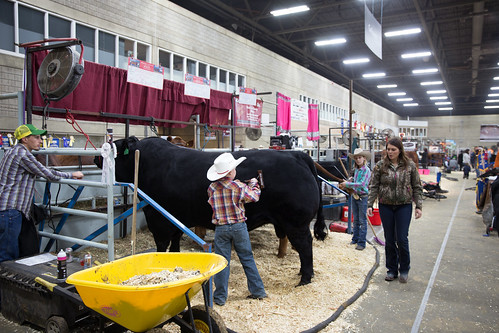
Farmfair has since started charging admission ($5 for adults). Though I’d hope there would still be the chance for adult groups to utilize it as an educational experience, it is a reasonable cost given the breadth of events organized. We wandered through the halls, admiring the livestock and wishing we’d arrived in time to watch the stock dog competition.

Farmfair International

More animals

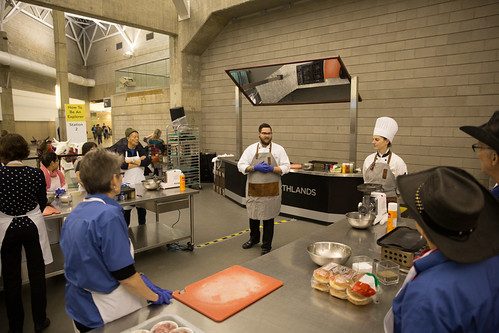
New to Farmfair this year was the Northlands Food Lab workshops, free with admission. The workshops focused on food skills that could be taught in an hour – cheese making and burger prep. We signed up for the latter, and joined about a dozen other participants on Saturday in the makeshift kitchen in the concourse of the Expo Centre.

Build a Better Burger

Chef Parker

Led by Northlands Sous Chef Chef Parker Regimbald, participants were shown how to make a better burger by grinding our own beef. The ten ounces of inside round we used had been donated by Sysco (of which we were reminded numerous times). While recognizing the need for sponsorship, particularly for a free workshop, it was still disappointing that the chance to highlight a local producer was squandered. Northlands has been highlighting its inroads with supporting local (with its food truck and partnership with Lactuca, among others), so this just seemed like a missed opportunity.

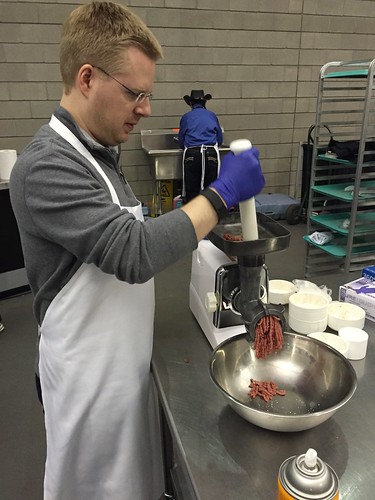
Making a Better Burger

Mack prepares his burger

At any rate, Chef Parker is an excellent instructor, articulate and clearly passionate about food. He offered the following tips:

  • If grinding your own meat, make sure to keep the meat cold before grinding it to decrease bacterial growth;
  • For additional flavour, grind in some pork fat or bacon (Northlands uses their house-made bacon for this purpose);
  • Make sure the patty is at least 1/3 larger than the bun you will use, as the patty will shrink during cooking;
  • Season in layers – toss in some salt and pepper as you’re mixing the meat, but also season both sides of the patty;
  • Grease the patty instead of the grill to ensure it doesn’t stick;
  • The patty is ready to be flipped once when it no longer sticks to the grill;
  • You can tell the second side is done when blood starts to pool on the surface, or alternatively, the feel of the meat is the same firmness as the area just beneath your thumb; and
  • To help the meat retains its juice, set a timer and rest the patty for 3 minutes before digging in!

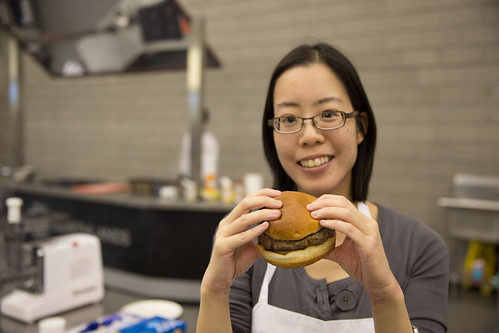
It was a fairly straightforward lesson, and given the only addition to the beef was salt and pepper, it was a very tasty burger.

Build a Better Burger

Thumbs up!

Chef Parker was very happy with the response to the Food Labs, and is hoping to run more such events, even outside of Farmfair. It was a great add-on to an existing event, so it would be great to see this topic and others offered again in the future.

Recap: Dinner at the Northlands Urban Farm for Alberta Open Farm Days

Although most of the events associated with Alberta Open Farm Days last weekend took place outside of Edmonton, there were still several opportunities to engage with agriculture within the city. Cindy recapped her visit to Horse Hill Berry Farm and Reclaim Urban Farm, while Mack and I were fortunate enough to be invited as guests to attend a dinner at the site of the Northlands Urban Farm.

Northlands Urban Farm Dinner

Northlands Urban Farm

Lactuca, a local food producer, began as a backyard project, supplying restaurants and consumers at the 124 Grand Market. In 2014, in partnership with Northlands, Lactuca expanded their operations to a one acre site at 112 Avenue and 79 Street (about a 15 minute walk from the Stadium LRT station). This year, in conjunction with Alberta Open Farm Days, Northlands hosted a series of events to introduce the public to the urban farm, including tours, honey harvest demonstrations and cheese making workshops. The day concluded with the farm-to-table dinner.

Northlands Urban Farm Dinner

Beautiful setting

It was a beautiful evening for an al fresco supper, and thankfully, given the dinner would have us traipsing through the gardens, it had been blessedly dry that weekend. Five food stations had been set up around the perimeter of the farm, and guests were invited to visit each on our own time to sample a total of eight dishes.

Northlands Urban Farm Dinner

At the farm

Short of a brief welcome and introduction of the chefs involved, nothing more formal took place. I recognize that the staff had just led several farm tours earlier that day, but I assume a majority of those attending the dinner hadn’t been a part of them. Because of this, I thought it was a missed opportunity for Northlands to provide more information about their relationship with Lactuca, Northlands’ philosophy on local food, or, in the context of the meal we were about to enjoy, highlights of the Alberta products they had utilized.

Northlands Urban Farm Dinner

On-site hives

This last point was particularly glaring when we visited the stations. It became painfully obvious that while some thought had been put into creating the diverse menu, many of the frontline staff serving the food and drink didn’t have the same awareness of the focus on local. They couldn’t answer questions about the products used, and weren’t confident on where they had been sourced. I’m optimistic that because this shift has been fairly recent (for example, the Northlands food truck, 1879, has committed to using 75% local ingredients, just hit the streets in July), staff engagement can only improve from here.

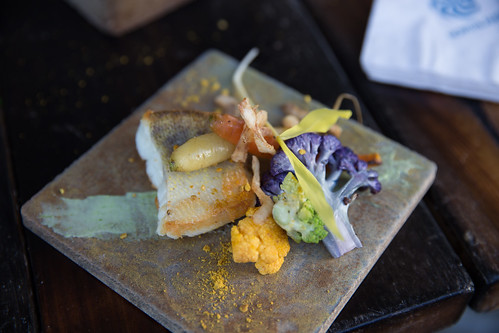
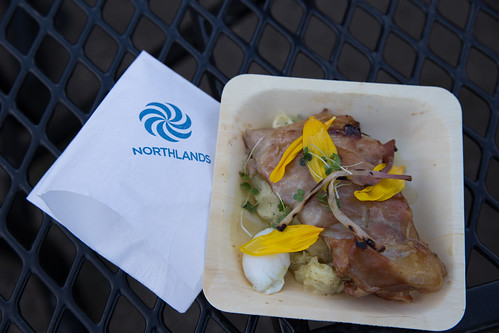
It is difficult to manage food quality in those makeshift outdoor kitchens, so as expected, some dishes were better than others. Our runaway favourite was the seared pickerel, with roasted cauliflower and broccoli, honey glazed carrots, crispy onions, bee pollen and corn shoots. The fish had been perfectly prepared, and the accompanying vegetables minimally cooked to emphasize their fresh quality.

Northlands Urban Farm Dinner

Seared pickerel

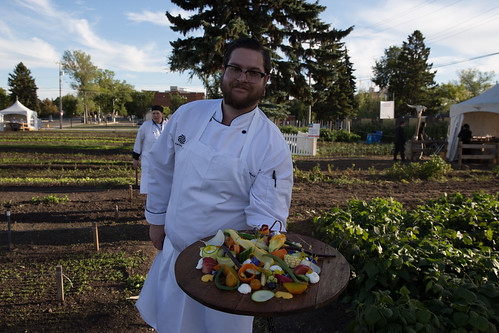
Similarly, the DIY salad featured the breadth of our harvest bounty, including, of course, Lactuca’s own greens and vegetables.

Northlands Urban Farm Dinner

DIY salad platter

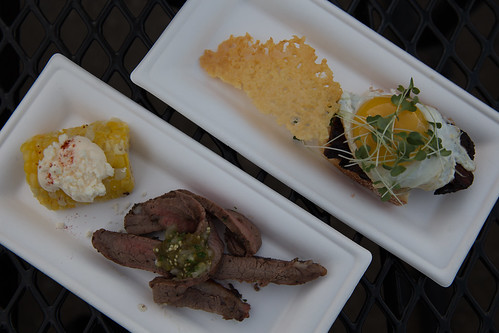
The hay-smoked chicken had promise, but was just too salty. The same could be said of the braised bacon, especially when coupled with a gouda crisp.

Northlands Urban Farm Dinner

Hay smoked chicken

The marinated flank steak was more successful, served with salsa verde. But Mack remarked that the corn should have been left alone; its natural sweetness really didn’t need to be masked by mayo.

Northlands Urban Farm Dinner

Braised bacon and marinated flank steak

I did enjoy the duo of desserts. The first was a smoked almond ice cream topped with grilled peaches, lavender and a lemon cake cookie.

Northlands Urban Farm Dinner

Smoked almond ice cream with grilled peaches

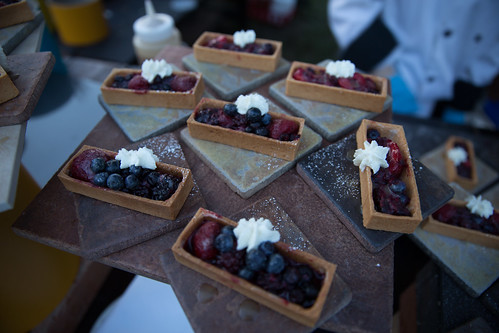
The second was a mixed berry tart with maple sauce and Chantilly cream. I could have easily had another; it was summer in two bites.

Northlands Urban Farm Dinner

Mixed berry tart

I can appreciate that this was the first such dinner organized by Northlands, and if they decide to host it again next year, improvements could be made. The increase in urban agriculture projects should be celebrated with events like these so that more Edmontonians can learn about the potential we have to supply food within city limits. Northlands has the unique opportunity to make farm-to-table suppers a more frequent, accessible experience. I look forward to what they may have in store for us next year.

Thanks again to Northlands for inviting us to be a part of their inaugural farm dinner.

Check out Linda’s recap of the evening here.

Recap: 2015 Grand Taste Tour with Wolf Willow Honey, Tofield Packers and Irvings Farm Fresh

On July 12, 2015, Mack and I were guests of the second annual Grand Taste Tour, a partnership between the 124 Grand Market and Taste Alberta.

The Grand Taste Tours began in 2014 and seek to showcase some of the great local producers we are fortunate to have in this province, and to enjoy some of their bounty as prepared by a talented local chef.

In our case, Mack and I joined Phil and Robyn on the "bee bus", meaning that we would be visiting an apiary to start. Our counterparts on the "dairy bus" headed to the Breevliet Dairy Farm first, after which both groups would meet up at the second and final stops.

We learned that the 2014 Grand Taste Tour was much different, as it was self-guided, and participants had to reach the participating farms on their own. Although some might appreciate the choice and freedom of a choose-your-own-adventure tour, we appreciated the fact that all logistics of transportation and food taken care of this time around.

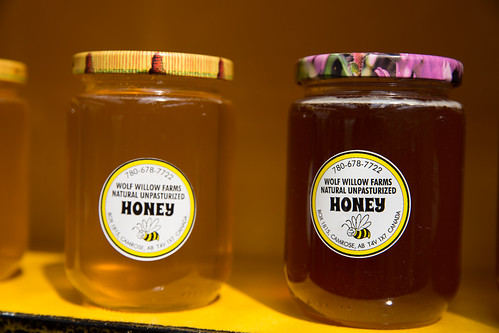
It took the bus over an hour to reach our first stop, Wolf Willow Honey. Their products can be found on the shelves at Duchess Provisions, but for the most part, Wolf Willow prefers to sell their honey direct to consumers from the farm or at the Camrose Farmers’ Market.

Wolf Willow Honey

Wolf Willow Honey

Doug Chalmers shared that Wolf Willow has 400 hives (with 50-80,000 bees making up each hive). He described the surrounding area as a “bee haven”, with more than 200 perennials available to their bees. That said, he does liken the collapse of bee colonies to the changing landscape after the second World War, linked to the decrease in food sources and the increase in pesticide use.

Wolf Willow Honey

Doug Chalmers

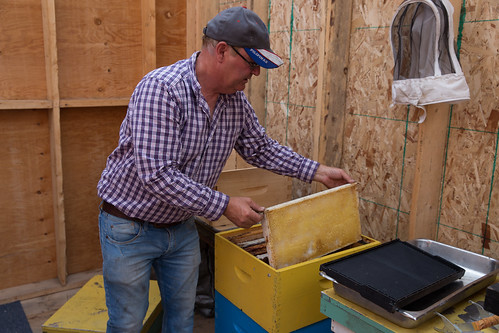
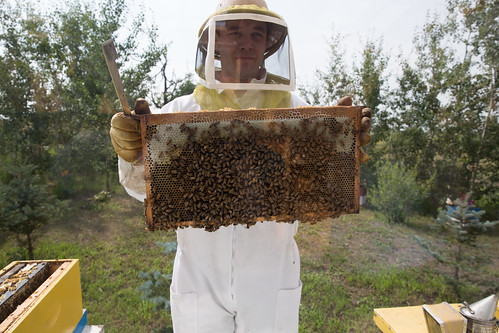
Using burlap smoke to sedate the bees, the beekeeper was able to pull up a frame for us to see.

Wolf Willow Honey

Beekeeper Ben

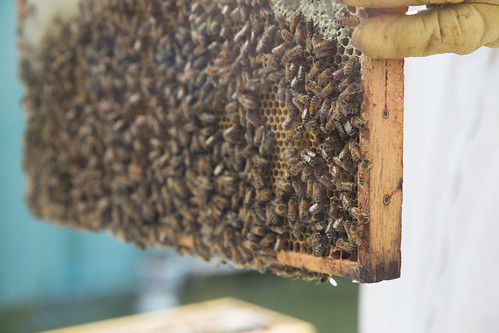
The bees were busy working away – did you know that a single bee makes just 1/12 of a teaspoon of honey over its lifetime?

Wolf Willow Honey

Bees

We also had the chance to sample some of their honey products, which included light clover, dark clover, dandelion, creamed buckwheat and an end-of-season 100 flower blend. Mack and I would have appreciated more of a guided tasting, but then again, we’ve been spoiled with superb honey education sessions led by Patty Milligan.

Honey tasting

Mack

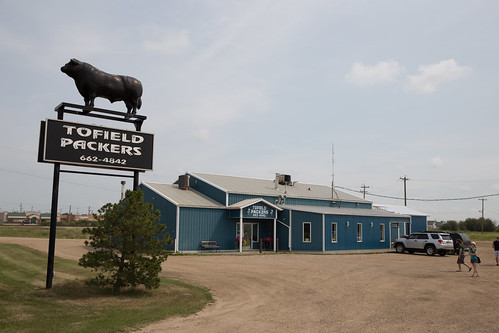
It was then on to Tofield Packers, a small abattoir used by Irvings Farm Fresh, among other local producers.

Tofield Meat Packers

Tofield Packers

They are committed to public education, often opening their doors to 4H Clubs, so it wasn’t the first time they’ve hosted external groups. Owner Dale Erickson was our no-nonsense guide, and though he was responsive to questions asked, a more thorough explanation of the process up front would have been ideal.

Tofield Packers

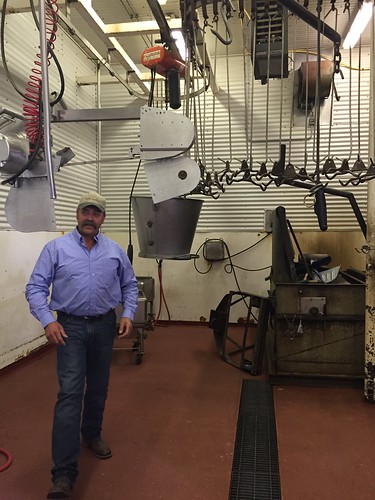
Dale Erickson on the kill floor

We did learn that they process pigs, cows, sheep, goat, bison, elk, ostrich and alpaca. While they have processed game in the past, they shy away from it because the animals are typically very dirty. On a good day, the plant can get through 7 animals.

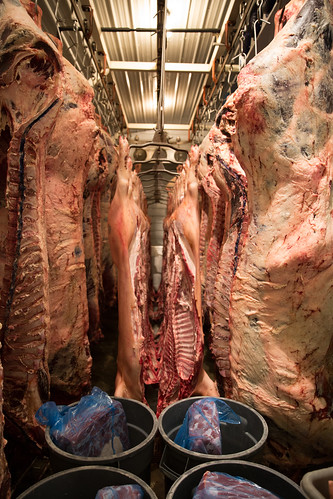
Dale led us through the various coolers in the facility, including the wet room, where the animals are left to drain of blood and other fluids, and then the aging room, where sides are hung for anywhere from 14 to 21 days.

Tofield Meat Packers

Coolers

Tofield Packers also purchases sides of animals to process into hams, sausages and other cuts of meat which they sell out of their retail shop.

An abattoir is something every meat eater should see, to appreciate the end of a life that has travelled from a farm to your table. Tofield Packers is a great example of a family-owned facility that works with small farmers to put forth good quality products.

Before heading to our final stop, our group congregated in the parking lot to enjoy a snack. Given it was a tour sponsored by Taste Alberta, the big box store granola bars and watermelon was unexpected and ill-fitting. Hopefully snacks better aligned with the tour can be arranged next year.

Mack and I were most looking forward to the visit to Irvings Farm Fresh. We’ve been buying pork from Alan and Nicola Irving from the City Market, Old Strathcona and Salisbury Farmers’ Markets for years, and had always meant to stop by the farm to see where their pigs are raised.

Irvings Farm Fresh

With Alan

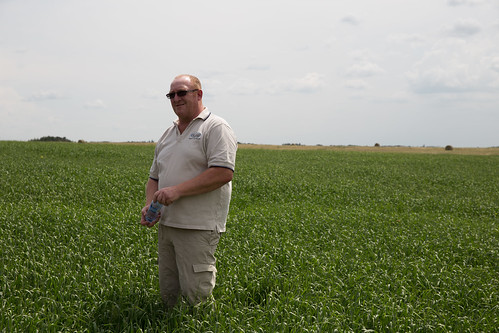
We finally had that chance, and we weren’t disappointed. The farm occupies a total of 80 acres, and this year, for the first time, the Irvings are growing their own grain for feed. The barley was surprisingly green, but the grass in an adjacent field was incredibly brittle under our feet.

Irvings Farm Fresh

In the barley field

A few years ago, when Alan and Nicola were deciding on how to expand their operations, they had a choice to make – they couldn’t do it all on their own, and had to choose between outsourcing their breeding or their product line. They decided the latter was more important, and with a facility built to process all cuts on-site, they are able to guarantee their products are free from wheat, dairy, eggs, nuts, soy and MSG.

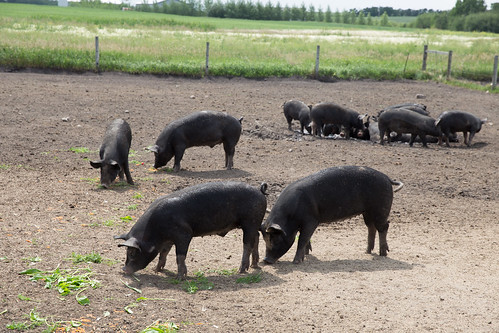
As a result, their Berkshire pigs are brought to them at 2-3 months. Irvings raises them until they’re between 6-7 months, or approximately 250 pounds. Beyond that, and the ratio of fat to meat becomes unwieldy.
Irvings Farm Fresh

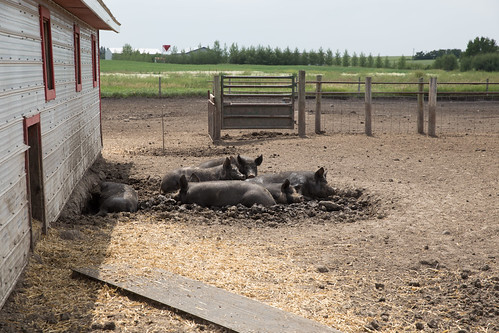
Pigs

The Irvings believe that pigs should live as naturally as possible, so provide their animals with an environment where they have the freedom to move, dig, root, sleep and eat. They self-regulate, and on that warm afternoon, most of them had sought shade to keep cool (pigs don’t sweat). That week, the farm had about 70 pigs.

Irvings Farm Fresh

In their element

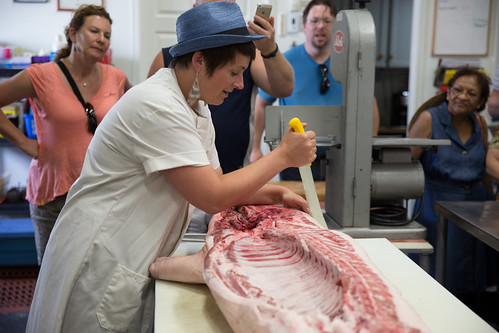
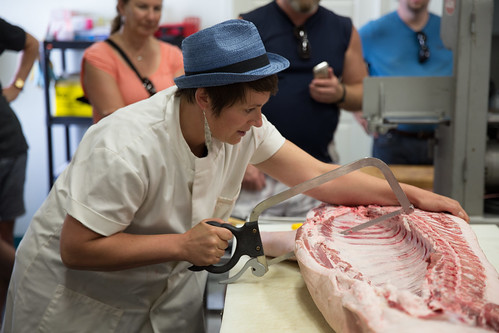
Before lunch, we had the privilege of observing a butchery demonstration by Elyse Chatterton. We learned that the pigs are killed at Tofield Packers, then brought back as sides to the Irvings facility (she even pulled out the bullet from the skull of the pig!).

Irvings Farm Fresh

Elyse Chatterton

Trained in England, Elyse learned how to do everything by hand, eschewing the use of even a band saw for cuts through bone. As a retail butcher, Elyse loves the process of transforming a “beast” into attractive cuts of meats that catch a customer’s eye. She skillfully carved up several shoulder roasts (her favourite cut), and indicated that she could dispatch the entire side in one hour.

Irvings Farm Fresh

All by hand

Her sense of humour was evident throughout the demo; for instance, some have questioned whether she is able to do everything a male butcher can do. Her answer: she isn’t able to go into the men’s washroom.

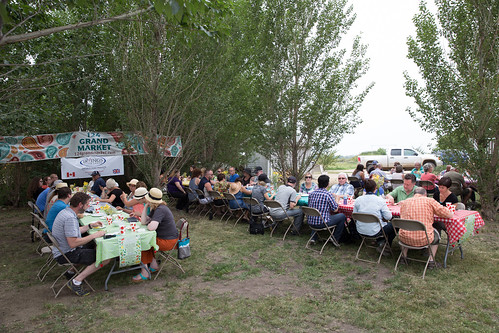
Then it was time for lunch, picturesque communal tables set up beneath several trees, adjacent to a makeshift outdoor kitchen. Chef Daniel Costa (of Corso 32 and Bar Bricco fame) and his team certainly had to work in an untested environment, but in spite of this, managed to create a memorable meal that celebrated the flavours of summer.

2015 Grand Taste Tour

Lunch

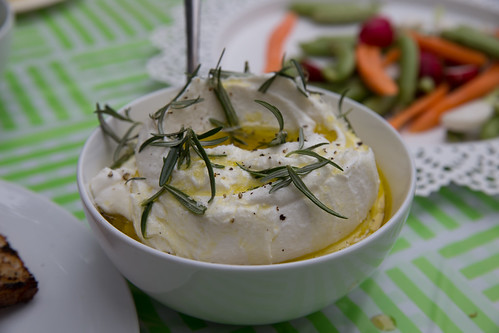
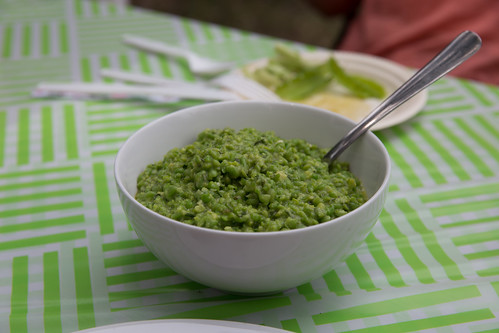
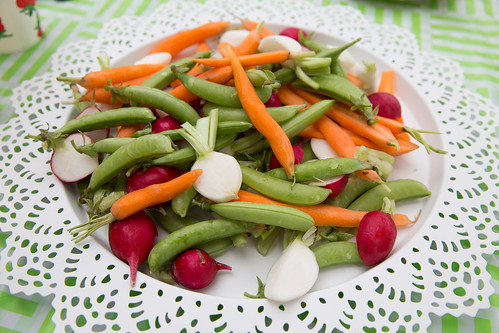
A plate of snappy, raw vegetables from Riverbend Gardens reminded us that sometimes, simple is best. It was followed by grilled Bonjour Bakery crostini topped by the most luxurious Fairwinds Farm goat ricotta and fresh spring pea and mint spread.

2015 Grand Taste Tour

Pinzimonio (raw vegetables)

2015 Grand Taste Tour

Goat ricotta

2015 Grand Taste Tour

Spring pea and mint

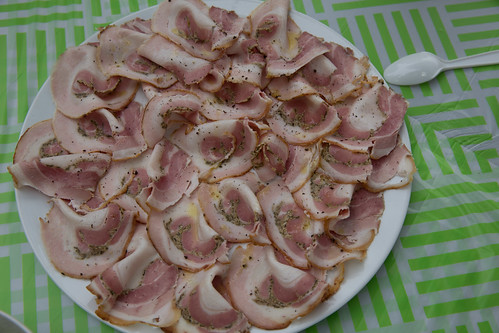
We were spoiled with platters of porchetta and panzanella made with tomatoes and cucumber from Gull Valley Greenhouses.

2015 Grand Taste Tour

Porchetta

2015 Grand Taste Tour

Panzanella in action

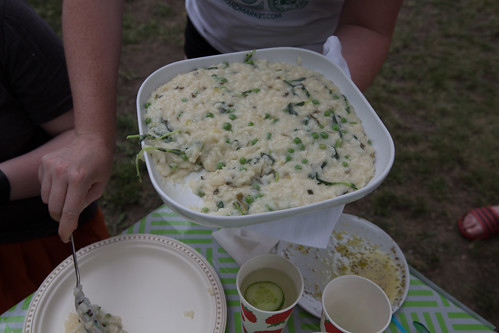
My favourite dish was the spring onion, pea shoot and whey risotto. Given risotto is difficult to make under regular circumstances, it was an even bigger feat on this stage. The whey imbued a creaminess that had me going back for thirds.

2015 Grand Taste Tour

Risotto

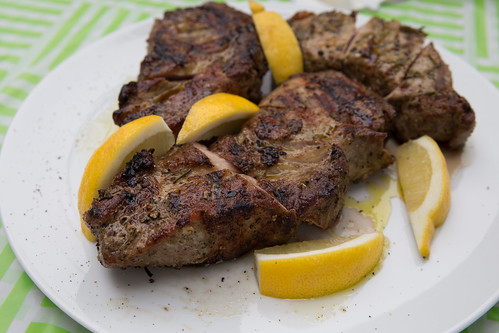
Grilled Irvings pork loin capped off the main course. The meat was overdone for my taste, but to be honest, I’d filled up on the preceding dishes.

2015 Grand Taste Tour

Grilled pork loin

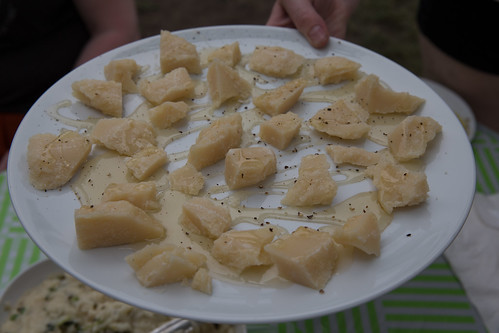
But we weren’t done yet – generous chunks of two year old Parmesan, drizzled with the 100 flower blend of Wolf Willow Honey, followed suit. The finale was a silky panna cotta with honey, grappa and berries.

2015 Grand Taste Tour

Parmesan and honey

2015 Grand Taste Tour

Panna cotta

I’m certain that had the menu been advertised alongside ticket sales, the Grand Taste Tour would have been sold out; a similar meal at Corso 32 would have easily cost the equivalent of the $90 ticket price. Next year, organizer Kirsta Franke has already secured the chefs from North 53 for the lunch portion; if the cost of the tour holds steady, the all-inclusive nature of the event and the high quality of the food should sell itself.

2015 Grand Taste Tour

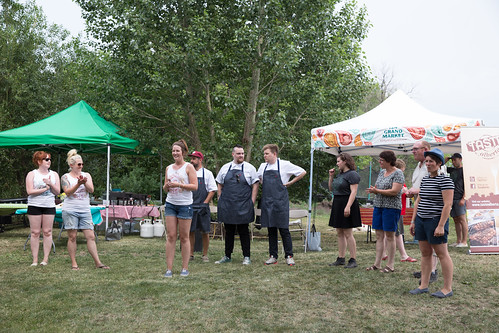
Kudos to the team behind the day

If the tour of Irvings Farm Fresh piqued your interest, you’re in luck – Alan and Nicola are participating in Open Farm Days on August 23, 2015, from 11am-4pm. Visit with the pigs, tour the meat shop, and enjoy a “simply porky lunch”.

Thanks again to Gastropost, Taste Alberta and the 124 Grand Market for inviting us, and congratulations to the organizers for a second successful tour. I look forward to seeing what’s on the agenda for next year!

Check out Mack and Linda’s recaps of the events, too!

City Market 2014

I haven’t been up early for the City Market much this season, but in preparation for a potluck tomorrow, I thought it best to make sure we had our pick of produce. Good thing too, given how busy it was right at the start!

City Market 2014

Overhead view

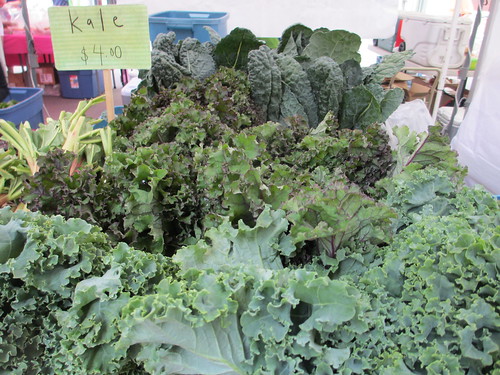
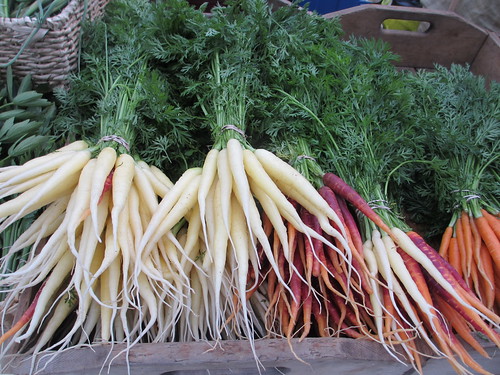
I haven’t written much about the market this year, a deviation from previous summers, and because of this it’s harder to reconcile that we’re nearly halfway through the outdoor market season already! On the bright side, it means we’re that much closer to some of my seasonal favourites, including green beans and field tomatoes. But in the meantime, this week saw the return of carrots, new potatoes and peas.

City Market 2014

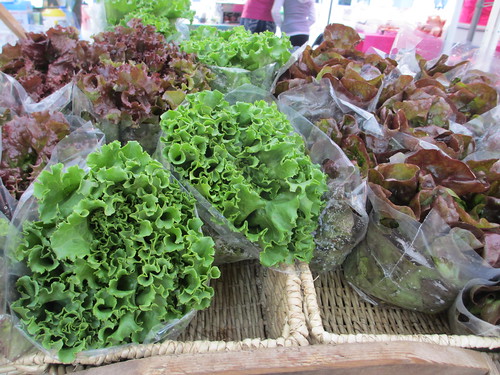
Kale from Sundog Organic

City Market 2014

Rhubarb from Sundog Organic

City Market 2014

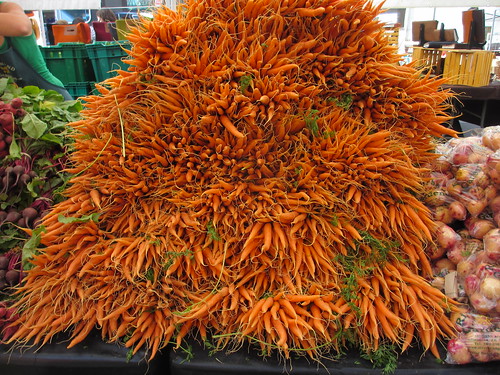
Carrots from Sundog Organic

City Market 2014

Lettuce from Sundog Organic

City Market 2014

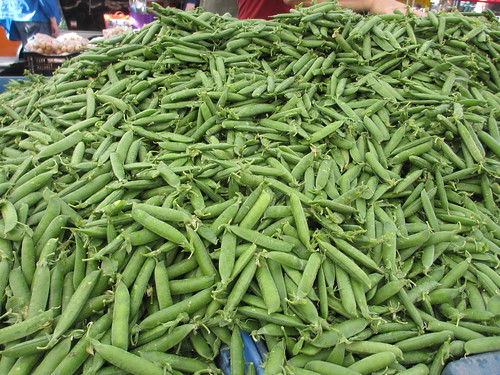
Peas from Kuhlmann’s

City Market 2014

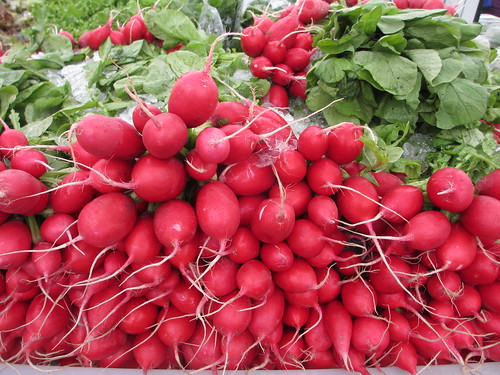
Radishes from Kuhlmann’s

City Market 2014

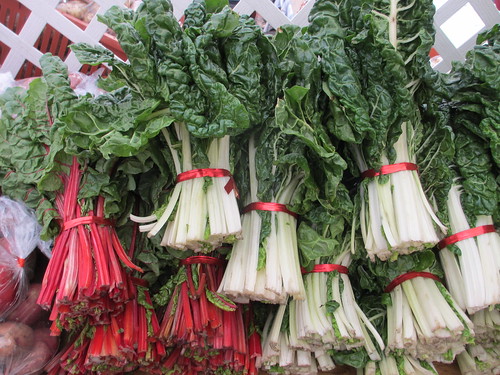
Swiss chard from Kuhlmann’s

City Market 2014

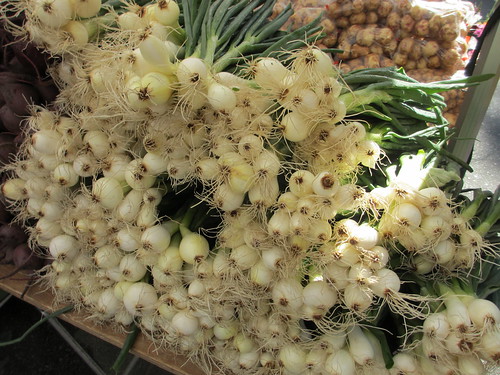
Green onions from Kuhlmann’s

City Market 2014

Broccoli from Green Valley Farm

City Market 2014

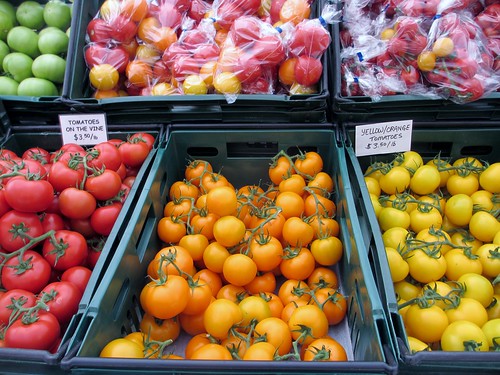
Tomatoes from Doef’s

City Market 2014

Potatoes from Riverbend Gardens

City Market 2014

Carrots from Riverbend Gardens

City Market 2014

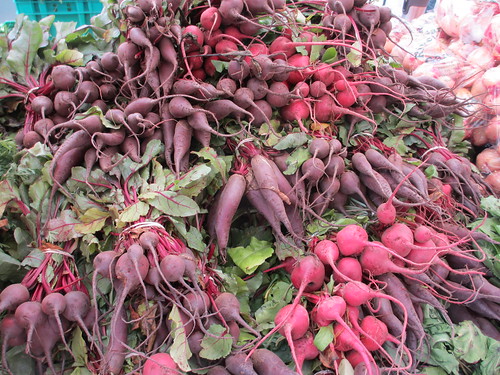
Beets from Riverbend Gardens

City Market 2014

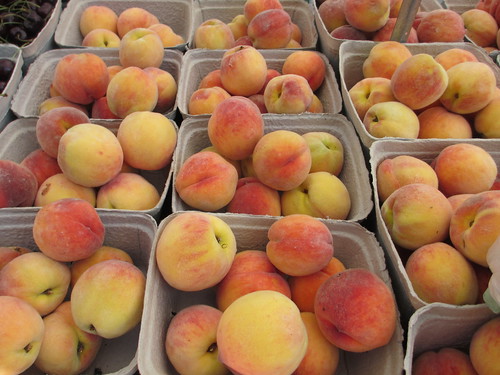
Peaches from Steve & Dan’s

City Market 2014

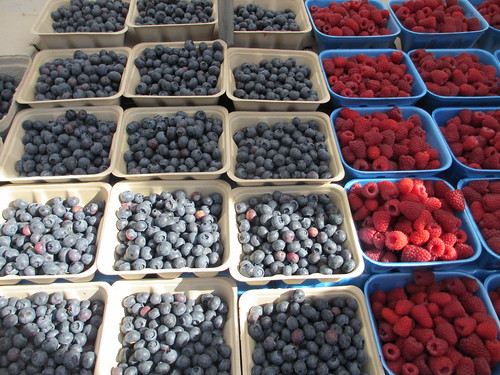
Berries from Steve & Dan’s

City Market 2014

Cherries from Steve & Dan’s

One can only hope the gorgeous weekend weather will continue all market season. See you there!

Edgar Farms’ 2014 Asparagus Festival

Mack and I have had intentions to visit the Asparagus Festival at Edgar Farms for several years, but summer weekends are always too easily filled. This year, we made sure to book it in our calendar well in advance, and finally made it out there on June 15, the last day of their 2014 festival.

Edgar Farms' Asparagus Festival

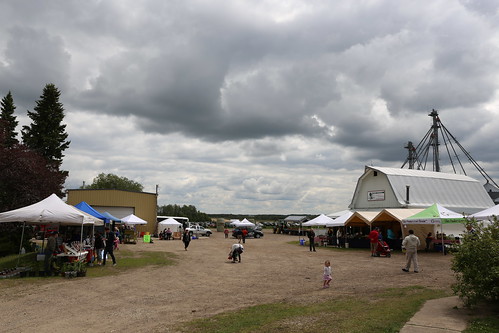
Asparagus Festival

Edgar Farms is located in Innisfail, about two hours south of Edmonton. They offer rhubarb, peas and grass-fed beef, but what they are known for is their tender, sweet asparagus. With 28 acres, they have the largest asparagus patch in Alberta.

The $5 (per adult) admission granted us access to explore the farm, take part in tours and sample asparagus-centric dishes. We started with the latter first – if not just to warm ourselves up! It wasn’t the warmest of days, with clouds threatening rain all afternoon, so creamy asparagus soup hit just the right notes. The southwestern beef on a bun was fine (especially with pickled asparagus as a condiment), but what really surprised us was the asparagus dip – the Edgar Farms version of guacamole, substituting asparagus for avocado. It would be a great use for those bags of asparagus “seconds”!

Edgar Farms' Asparagus Festival

Asparagus for lunch

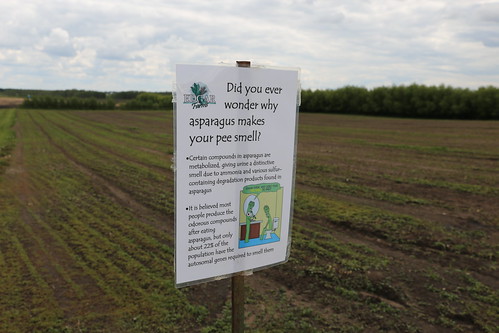
Satiated, we ended up first on a self-guided tour of the farm, then joined up on a tractor-pulled group tour. The self-guided tour was marked by informative posters along the way (some cheeky in nature), and given we were the only ones exploring on foot at the time, granted us some time and space to take in the farm at our own pace.

Edgar Farms' Asparagus Festival

Walking tour markers

Edgar Farms' Asparagus Festival

Mack on the farm

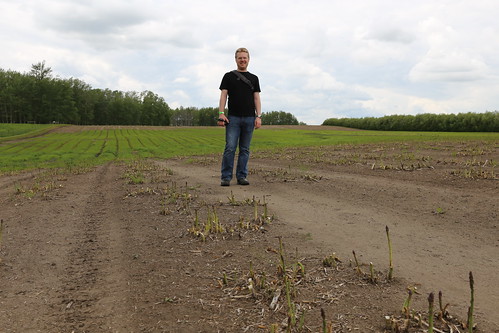
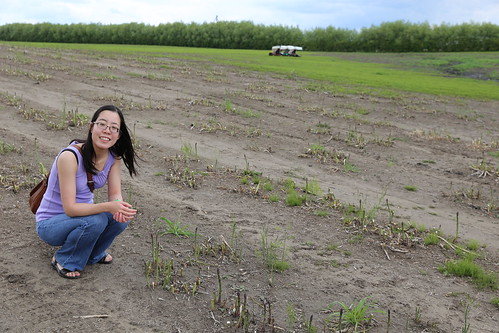
This was our first time seeing asparagus plants, and both of us were surprised at how patchy they appeared to be sown, with the scraggly spears of each crown shooting up at intermittent levels (Mack commented that he expected to see a field flush with asparagus, not unlike a wheat field). We learned later that the asparagus are harvested daily, and given the spears can grow up to ten inches a day, the patchwork effect made sense.

Edgar Farms' Asparagus Festival

Asparagus up close

We also got to see firsthand how sandy the soil was. Because asparagus prefer warmer conditions, the sandy soil is perfect to capture and retain heat, as well as offering better drainage. It now made more sense as to why the Edgar Farms staff at the farmers’ market were always strongly recommending thorough cleaning of asparagus prior to consumption.

Edgar Farms' Asparagus Festival

Taking a closer look

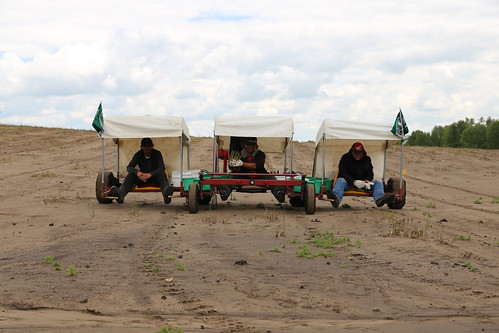
On our walk, we saw some asparagus pickers at work, riding a foot-controlled “asparagus buggy” built by the patriarch of the farm, Doug Edgar. The vehicle enables three farm workers to cover a lot more ground, as all of the asparagus is hand-picked.

Edgar Farms' Asparagus Festival

Say “asparagus”! (the staff were nice enough to pose for the photo)

Later, on the group tour, we were told that the plants take five years to mature to the point where they can be harvested for six straight weeks. And when asked how long the perennial would continue to give asparagus, our guide cited neighbouring plants that were still healthy at over one hundred years old.

Edgar Farms' Asparagus Festival

On the tour

At the end of June each year, the asparagus are left alone, and allowed to go to fern. We were told this allows the plants to rejuvenate for the following year.

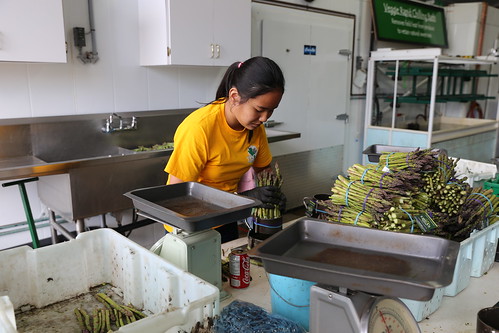
Back at the barn, we watched staff weigh and bundle asparagus, before placing it in a cold water bath to help the vegetable retain its natural sweetness.

Edgar Farms' Asparagus Festival

Bundling asparagus

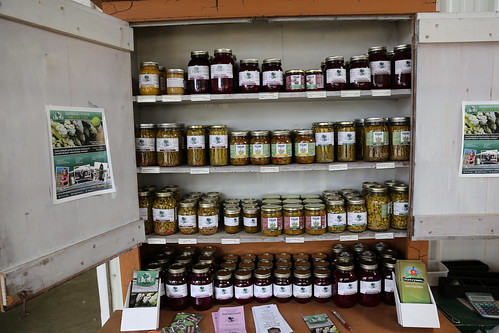
The farm’s commercial kitchen was located on the same facility, which allows the farm to value-add to their products and extend income past the short growing season. We picked up a handful of their frozen rhubarb and berry pies to take home (not sold at their stand in Edmonton, but can be found at the Edgar Farms/Innisfail Growers Calgary Farmers’ Market booth). The pies didn’t last two weeks in my freezer, as they were promptly devoured by my pie-loving family.
Edgar Farms' Asparagus Festival

Some of the Edgar Farms bounty

The farm also offered numerous attractions for kids – lots of friendly animals, a play area, and even an asparagus mascot!

Edgar Farms' Asparagus Festival

Goats

Edgar Farms' Asparagus Festival

Okay, so we’re not kids, but who could resist Gussy?

The Asparagus Festival was a fun day trip, and a great way to spend a summer afternoon. I’d recommend it to anyone interested in learning more about local food – watch for dates in June 2015.
Slow Food Edmonton’s Berkshire & Beer

Last Sunday, Mack and I walked over to Yellowhead Brewery to attend Slow Food Edmonton’s Berkshire & Beer event. The evening was touted as a fundraiser for Thousand Gardens in Africa, a Slow Food International project to initiate much-needed gardens in numerous drought and poverty-stricken communities in Africa. As a result, the ticket price was much steeper than previous Wild Boar & Beer events organized by Slow Food, with a focus on education.

Berkshire & Beer

Berkshire & Beer

I struggled a bit with the thread connecting the eight different presentations together. To be sure, they all focused on aspects of food, but the divide between discussions on international projects (Thousand Gardens and Terra Madre) and local projects (Shovel and Fork and Operation Fruit Rescue Edmonton, among them) was jarring. A reshuffling of the order (perhaps a gradual move from international to local, or the other way around) would have helped, but there still didn’t appear to be an overarching theme. It also felt a bit like the content functioned as an introduction to local food producers and initiatives, in spite of the audience make-up (most seemed quite familiar with the subjects already). I had to wonder if the intended target for the event was actually those newer to the local food scene – if that were the case, the ticket price probably should have been lower.

Berkshire & Beer

Allan Irving from Irvings Farm Fresh (I love that he has a beer in hand!)

Though I understand that the event was a fundraiser, it would have helped if the organizers were up front about what proportion of the ticket price would be donated to charity. Otherwise, I found it difficult to manage my expectations around the food that would be served, especially because beer wasn’t included. It sounds like the chef at Yellowhead had free rein on preparing the nose-to-tail dishes (made from an Irvings Farm Fresh pig), and while we enjoyed the food, it amounted to little more than a series of passed hors d’oeuvres.

Berkshire & Beer

Pork leg confit slider and pork belly on a beet crisp with daikon and carrot slaw

Of the dozen bites we tried, my favourites were the tenderloin schnitzel, topped with sauerkraut, gruyere and garlic aioli, as well as the blood sausage and red wine onion demi glaze crostini.

Berkshire & Beer

Tenderloin schnitzel

Berkshire & Beer

Blood sausage

At the root, this event was fundamentally different than the Beer & Boar events Slow Food Edmonton has offered in the past (including one, full disclosure, that I helped co-organize several years ago). I did appreciate the more formal opportunity for learning, but should Berkshire & Beer return to the calendar next year, I hope some changes are made to make it more engaging, and an even bigger success!

Kudos to Addie and Genevieve and the rest of Slow Food Edmonton’s volunteers for their work, and I look forward to reading about the progress on the garden funded by the dollars raised that night.

Discover Your Roots: Eat Alberta 2013

I can’t believe we’re already on our third Eat Alberta! The hands-on food conference, an opportunity for consumers to learn about how to grow, forage and prepare food from some of Alberta’s most knowledgeable food personalities, will be taking place again this April.

What: Eat Alberta 2013
When: Saturday, April 20, 2013
Time: 8:30am-5:30pm
Where: Northern Alberta Institute of Technology, 11762 106 Street

We are thrilled to be returning to the kitchens of NAIT, which turned out to be a brilliant venue for the event last year.

Eat Alberta 2012

Owen Petersen and his Sourdough 101 class

Our keynote speaker this year is Jeff Senger of Sangudo Custom Meat Packers. Jeff will be sharing his story of transition from an urban to a rural lifestyle, one that pulled him from his desk-bound accounting job to a labour-intensive career as a butcher.

We are happy that some of our former instructors are back to share their wisdom with a new group of students this year, including:

  • Sourdough 101, led by Owen Petersen of Prairie Mill
  • Knife Skills, led by Kevin Kent of Knifewear
  • Cheese Making, led by Chef Allan Roote of NAIT
  • Artisan Sausage Making, led by Allan Suddaby of Elm Cafe
  • Vinaigrettes: More Than Just Salad Dressings, led by Chef Elaine Wilson of Allium Foodworks

Eat Alberta 2012

Kevin Kent of Knifewear

But of course, we are also welcoming many new presenters, who will be teaching some exciting sessions, including:

Eat Alberta 2012

Making gnocchi at Eat Alberta 2012

Undoubtedly, hands-on sessions are the most popular, and past feedback has indicated that we needed a better system of ensuring a fair distribution of these sessions. So this year, we have organized different “tracks” made up of four session each, the majority of which include two hands on sessions, one guided tasting and one presentation. We know that all of our presenters are passionate and engaging, so we are confident that no matter which track you choose, you will not only learn a lot, but will have a great time in the process!

We have also added an MC to help facilitate the day, none other than Jennifer Crosby of Global TV. Jennifer is a farm girl from Northern BC, and is a regular contributor to Taste Alberta. And in place of a plenary panel to end the day, we are introducing a series of two-minute “lightning talks” as a way to connect attendees with other food-related resources and organizations in the community. At the end of the day, although we have changed a few elements this year, we stayed true to our commitment to highlighting food skills and connecting consumers with local and regional products.

Tickets are $135 each, and include 2 plenary sessions, 4 concurrent sessions, breakfast, lunch and a wine down. Tickets for Eat Alberta will go on sale next week, but in the meantime, make sure you sign up for the mailing list on the website. We will be sending out a notice to let you know when the tickets go live!

I hope to see you out at Eat Alberta!

Thoughts on Fresh: Edmonton’s Food and Urban Agriculture Strategy

On September 30, 2012, the City of Edmonton released Fresh: Edmonton’s Food and Urban Agriculture Strategy. It was a document fifteen months in the making, drafted primarily by an advisory committee made up of fifteen members, with some consideration of public input contributed through other channels.

Although a majority of the strategic directions put forward in Fresh address food purchasing, preparation, consumption, celebration and waste, much of the discussion in the media and online has only touched upon the strategies related to peri-urban agriculture, more specifically in this case referred to as the northeast farmlands.

Mack has done an exceptional job filtering through the premise behind the land debate, and I would refer you to his blog for an overview of the history and analysis of the development question. But it is important that the food-related portions of the document are not overlooked – after all, the strategy tries to address more than just agriculture.

That said, I am very disappointed in the food-related strategic recommendations. I recognize it is easier to criticize than to create, but I did participate in the online survey and one stakeholder consultation, and am a little astonished that this was the best they could come up with. They claim if the “Strategy’s Recommendations are adopted, the City of Edmonton will be well positioned to be a leading example for municipal food and urban agriculture initiatives” (23). But if that were true, I think Fresh would have taken more risks and aspirations instead of reading as the flat, mostly vague document that it is.

Of course, much of my criticisms below can be attributed to the short timeline permitted for the development of the strategy, as well as the failure to include some of the key members of the city’s food community in the consultation process. But still, given Fresh is what the Executive Committee will vote on at the non-statutory public hearing on October 26, 2012, this is what we have to go with.

What Fresh is missing

  • Recognition of work already being done: Mack and I never expected to have What the Truck?! mentioned in Fresh given it only began in 2011, so it was a surprise to find our festival acknowledged in the recommendation relating to enlivening the public realm. As a result, it is an even larger failure of the strategy to omit two other longer-standing volunteer-based groups working towards food production and food recovery. The first, the River City Chickens Collective, proposed a backyard chickens pilot to City Council back in 2010. They were rebuffed because of the forthcoming development of the food and agriculture strategy which would be considering this, among other potential urban agriculture ideas. The resulting recommendation in this strategy, developed two years later? “Examine opportunities for citizens to keep bees and raise hens” with the specific action reading, “Partner with local non-profits to assist in the evaluation of the implications of allowing urban backyard hens” (33). The Collective is not only in the same place it was in 2010, but Fresh doesn’t even go so far as to recommend backyard hens; instead, it chickens out with a loose directive of further study. The second relates to “Develop partnerships to assist in the redistribution of healthy, fresh and high-quality surplus food” (46). Operation Fruit Rescue Edmonton (OFRE) has been run by dedicated volunteers since 2009, gleaning excess fruit from backyards and donating a portion of that surplus to charitable organizations. Fruits of Sherbrooke, with a similar mandate but a smaller catchment area, started in 2011. It would be natural to link them to the recommendation of expanding existing gleaning initiatives, but both OFRE and Fruits of Sherbrooke are conspicuously absent.
  • Stronger emphasis on food skill development: if one of the underlying objectives of Fresh is to help increase the demand for locally grown and raised produce and proteins, it is logical to conclude that encouraging food skill development (i.e., how to cook and prepare fresh foods) is vital to achieving that goal. We know that we are failing to provide basic food preparation education to young people, which leads to a greater reliance on processed foods. Although this is not an easy problem to tackle (and involves broader issues such as commodity subsidies, food deserts, and income disparity), Fresh barely acknowledges the importance of food skills. The sole recommendation reads, “Work with the Edmonton Food Council and various partners (such as NAIT, the University of Alberta, and Northlands, among others) to provide multiple learning opportunities on key food and urban agriculture topics and initiatives” (28). What does “work with” mean? Would these “multiple learning opportunities” be affordable and accessible? Although NAIT and the U of A have permitted rentals of their facilities for food skills sessions run by Eat Alberta in the past, they have never offered reasonably priced sessions to the public on their own accord – how would the City propose to change this (e.g. with grant incentives)? Not only is this recommendation vague, but it appears the committee did not take the time to articulate the implications.
  • Link to food justice: although the broader definition of food security is somewhat addressed in Fresh (i.e., the ability for an area to feed its citizens in the event of an interruption to the food system), none of the strategies highlight food justice and how those with low or fixed incomes can access local food. Save the recommendation relating to the gleaning and redistribution of surplus food (46), the strategy is strangely silent on this issue. I understand it is difficult to represent all possible interests and perspectives, but it is curious that not a single recommendation explicitly targets the empowerment of food insecure individuals and families.
  • Opportunities to learn from and celebrate immigrant and Aboriginal food culture: given the growing number of immigrants choosing to settle in Edmonton, and the increasing population of urban Aboriginals residing in our city, it is a glaring omission that there are no recommendations that encourage learnings from either of these minority groups. There is a nominal mention of “Engaging…immigrant group associations to participate in celebrations and events” (43), but it fails to address that many of these small organizations are struggling to operate, and without support aren’t readily able to take on new initiatives. Enhancing our knowledge of diverse food practices and acknowledging the wealth of experience in our community should be a pillar of the strategy, not a token, an idea reinforced by Kathryn Lennon of the Multi-Cultural Health Brokers.

What Fresh is lacking

  • Action-oriented, clear language: what most struck me in my first reading of Fresh was its lack of a backbone. The committee was charged with making recommendations, which City Council can, in theory, accept, reject or modify. So I wasn’t sure why, in countless instances, where recommendations could have started with direct, action-oriented words such as “create” or “partner” or “initiate”, we instead are left with non-committal recommendations such as “Explore the creation of an Edmonton Food Charter” (25) or “Identify urban agriculture opportunities in existing and developing neighbourhoods” (32). To me, the weak language is a greater indication that the strategy as a whole needs to be reworked.
  • Big, thought-provoking ideas: was it too much to hope for that the food and agriculture strategy could excite people? Get Edmontonians thinking about the possibilities, or at least generating a healthy debate among citizens? I recognize that many of the recommendations were inspired by other cities, and while I am not arguing for a reinvention of the wheel, Fresh could have included at least a few more creative, off the wall suggestions. Instead of the non-binding “Encourage developers to provide land and infrastructure for urban agriculture” (32), how about recommending that the City force developers to earmark green space for community gardens, or pledge to double the current inventory of community gardens? Or, while it might be a start to “Increase local food purchasing within City of Edmonton operations” (40), wouldn’t it be great if Councillors led by example and committed to “go local” one week every year by ensuring at least one meal per day was primarily made up of locally-sourced ingredients (similar to the Transit Riders Union of Edmonton’s week-long transit challenge). Even more revolutionary, offer some sort of economic incentive through a tax break for restaurants that source at least 20% of their ingredients from local farmers (thereby encouraging demand for local product, perhaps even allowing restaurants to lower menu prices because of the incentive). Sure, such ideas may not ever pass through Council, but they would at least spur discussion, necessary to engage citizens on these issues.
  • Addressing the ambivalence towards supporting local: Fresh seems to take for granted that at present, the vast majority of Edmontonians do not support local businesses and producers, or at least do not deliberately do so. Yes, we have made great strides in the past five years, especially in the local restaurant scene, but for every new small independent that opens, several more chains pop up in the city. Or, as Jennifer Cockrall-King pointed out in a recent panel discussion, spending at farmers’ markets is estimated to be a measly 1% of food household expenditures. Arguably, there are other means to access farm direct products (e.g., CSAs, produce box deliveries), but as a whole, I think it is safe to say a majority of Edmontonians source groceries from a large grocery retailer. Oft-cited deterrents for not supporting local farmers include cost (something Kevin Kossowan has debunked), convenience, and selection, but there is another reason at play that isn’t often discussed. While Mack and I were in Portland last month, we were blown away by the level of pride demonstrated by the locals about their food community at Feast, a festival highlighting the bounty of Oregon. From farmers and winemakers to salt miners and chefs, it was incredible to witness such an embrace and ownership over local proprietors. Edmontonians by nature are a self-depreciating bunch, quick to play down our assets and draw attention to our flaws. Worse, a majority remain strikingly indifferent towards supporting the home grown producers and independent businesses that are unique to our city. We truly do need to heed strategy 5.5 of growing local food supply and demand (39), but how? None of the recommendations address the fundamental question of how to cultivate the pride that ultimately translates into solid financial support for the local food economy.

While the food strategies are less contentious than those surrounding land use, they are no less important. New York-based chef Gabrielle Hamilton remarked at an event recently about “poor little food” – how food is being asked to cure all societal ills, from environmental concerns to health and family morale. But the truth is, food is a unifying factor that can ignite positive change.

If Fresh is passed, I remain optimistic that moving forward, a body like the Edmonton Food Council could help further articulate the actions that need to be taken by the City, particularly with regards to food skill development and partnerships with existing organizations. Food can be that spark for change – we just need to set the right parameters for it to help us enrich our community.