Recap: 2016 Gold Medal Plates

Two weeks ago, I had the privilege of attending the 2016 Gold Medal Plates, hosted at the Shaw Conference Centre in support of the Canadian Olympic Foundation. It’s been an incredibly successful fundraising event, having raised more than $11 million dollars for Canadian athletes since 2004. The culinary competition operated by Gold Medal Plates has become a benchmark for chefs in cities across the country, the preparation alone pushing chefs to refine their techniques, enhance flavour profiles and find the perfect beverage pairing. Those crowned at the local or national level are widely recognized for their achievement, and winning dishes can often be sampled at those restaurants for a taste of what judges deemed the best that year. Personally, I’d only read the results of the competition, and had never experienced it firsthand before this year.

Each of the ten competitors were tasked with crafting a dish and pairing it with a Canadian wine, spirit or beer. Unlike “mystery box” challenges that currently fuel reality television, chefs here are able to polish their dishes for weeks, meaning execution becomes the most crucial factor instead of thinking under pressure. Even in this year’s sample, it was wonderful to see the array of proteins showcased, and the diversity of cooking styles presented. If anything, it speaks to how fortunate we are to have such a rich food scene in Edmonton.

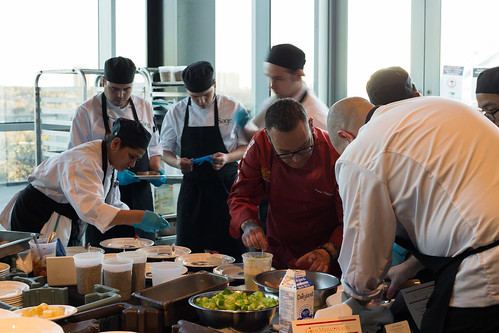
Gold Medal Plates 2016

Chef Shane Chartrand and his team from Sage

Before the start of the competition, I chatted with Mary Bailey and was thankful for her advice (as a senior judge, she’s well versed in the tasting component). She said I needed to hustle, or I might not get to all ten stations. She was absolutely right; I picked up the last dish just before the closing bell.

Gold Medal Plates 2016

The Chartier team

I was also glad to run into Teresa who was also in attendance that evening. It was fun to experience the event with someone else who was new to Gold Medal Plates, too.

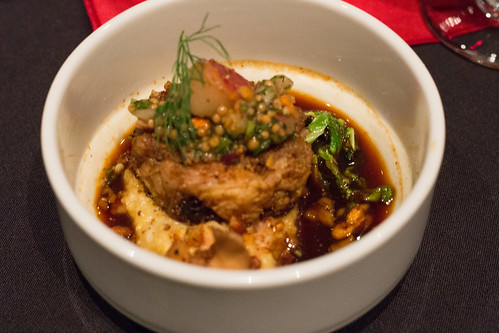
My favourites differed somewhat from the judges’ selections. Mary had said this would likely be the case – the audience choices never seemed to converge with the official winners. My top pick was by Sage’s Shane Chartrand. His coal smoked albacore tuna was such a revelation that I actually paused mid-bite to savour it; the texture and flavour imparted was incredible. The sablefish also had a pronounced charcoal essence that I appreciated.

Gold Medal Plates 2016

Charcoal and smoke from Shane Chartrand

I also enjoyed the dish prepared by Have Mercy’s Lindsay Porter. Her Alberta corn stone ground grits with shrimp, smoked Mangalitsa pulled pork, chanterelles and pecans was comfort food with refined flavours. Unlike some of the other plates, all components complemented one another well.

Gold Medal Plates 2016

Corn grits with shrimp and pulled pork from Lindsay Porter

While dishes were meant to be paired with a beverage, one of my other favourites was actually a drink. The Caribeau cocktail from Chartier, a combiation of Fallen Timber Saskatoon mead, Alberta Premium rye whisky, birch syrup, Saskatoons, and spices danced on my palate, the hint of fruit balancing nicely with the spirit base.

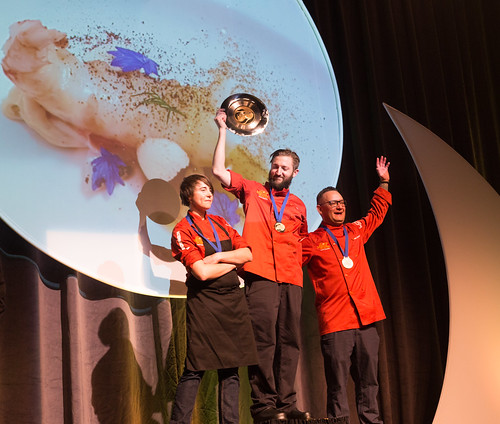
The winners, as selected by the judges, were:

  1. Eric Hanson of Prairie Noodle Shop, with his spot prawn, peach and plum preparations, paired with the Summerhill 2014 Ehrenfeiser
  2. Doreen Prei of Get Cooking, with pan seared Icelandic salmon, chanterelle & celeric puree, squash butter, and crushed cold smoked pumpkin seeds, paired with 50th Parallel Pinot Noir
  3. Shane Chartrand of Sage, with charcoal sablefish, cold smoked albacore tuna, sweet stock reduction, creamed corn, fondant potatoes, sesame seaweed snack and salt roasted beets, paired with Culmina 2015 Unicus Gruner Veltliner

The first place winner of Edmonton’s Gold Medal Plates will compete in the Canadian Culinary Championship finale in Kelowna on February 3-4, 2017. I wish Chef Hanson the best of luck as he represents Edmonton!

Gold Medal Plates 2016

2016 Gold Medal Plates winners

The “gold medal” portion of the event refers also to the Olympic athletes in attendance, ambassadors of how the funding raised can lead to success. Gold medalists from the recent Rio games, Rosie MacLennan and Erica Wiebe, were among the nearly three dozen athletes present. Being the Olympics junkie that I am, I couldn’t pass up the opportunity to fangirl and snap a selfie with Erica. She was extremely sweet and gracious.

Gold Medal Plates 2016

With Erica Wiebe!

The athletes also like a good party, as evidenced by the finale that evening. Led by Alan Doyle of Great Big Sea, the athletes piled on stage for a raucous rendition of “The Weight”. My sister, a huge fan of kayaker Adam van Kouverden, would have appreciated his enthusiasm at the mic.

Thanks to the organizers of the Edmonton Gold Medal Plates for having me!

10 Observations from 10 Years of Blogging

Ten years ago, I started a blog. I didn’t do so with a concrete purpose at the time, and simply used the website as a repository for my thoughts. When I began, I wrote about a greater diversity of subjects, but food rapidly became my primary topic of choice. Through this blog, I learned to cook, met other food-interested individuals, and discovered the restaurants I’ve come to love in this city.

Hawkers Market

Always ready to eat

Although the decade passed quicker than I’d care to admit, so much has changed in the food scene since 2006. Through snapshots of local food trends each year, it’s easy to see how far Edmonton has come. That said, I still think there is some room to improve – here are my 10 personal observations from 10 years of blogging:

  1. Consistency is the key to blogging: one of the questions I’m frequently asked is how I manage to keep blogging. In the beginning, reaching certain milestones was a personal challenge (one that was incidentally posed by Mack, who at the time was just a friend). Soon after, I started posting bullet points of interesting items I had come across, including food-related news. These items eventually warranted their own posts, and Monday night Food Notes was born. Without this weekly driver, it’s unlikely my blog would have lasted as long. There have been periods where I’ve been delinquent in writing regular posts, but those pesky Food Notes were always there, requiring my timely attention. These past ten years, I’ve seen many blogs come and go, and the best advice I can give aspiring bloggers is to develop a schedule, and keep to it.
  2. Social media was a game changer: in 2006, Facebook was two years old, and Twitter was founded that same year. It’s astonishing how social media has changed when, how, and with whom we share our food experiences. Those Food Notes that I mentioned used to rely exclusively on print media. Now, the vast majority of news is gleaned using the #yegfood hashtag on Twitter, providing an immediate and very public forum of discussion. Attitudes have also shifted drastically about food blogging and photography in restaurants – back in 2008, an incident with a manager at a local restaurant proved just how unprepared establishments were for citizen critics. Now, meals are captured for the masses on Instagram and Snapchat, and sites like Yelp and Zomato allow essentially anonymous reviews at the touch of a button. While restaurants have had to adapt to this new reality whether they liked it or not, tensions flared up again as recently as last week, so it’s clear that there’s still some work to be done.
  3. There are few degrees of separation in the food community: for a city of a million people, the food community is incredibly small. The advantage to this, however, is that this environment creates opportunities for learning and collaboration, something I’ve personally experienced. Over the years, I’ve had the privilege to work with several chefs to bring ideas of pedway and parkland pop-ups to life, among others. I’ve also found that the community as a whole is quite supportive, which is how a tiny festival can grow into something previously unimaginable.
  4. Pedway pop-up in 2012

  5. Money isn’t everything: some of the tension between food writers and restauranteurs involves the perception that writers are chasing free meals, and only those with deep pockets can afford to win over social media influencers. The truth is, many of the most endearing, perennially popular establishments in Edmonton such as Duchess Bake Shop didn’t start with an expensive splash. They have endured with a formula of quality products, good service, and consistency.
  6. Edmonton loves chains: the birthplace of Boston Pizza and Earls, Edmonton can’t escape its history of creating concepts that resonate for the average diner. Casual upscale chains dominate the mid-range restaurant scene in the city, in spite of the fact that similarly-priced independent restaurants offer more choice and better service. I have to credit their popularity to marketing, long-standing familiarity, and unfortunately, to urban sprawl – power centres are prime real estate for chain locations.
  7. Suburban restaurants on the rise: sprawl is also the reason behind the spread of independent restaurants across the city. When I started blogging, the vast majority of restaurants worth writing about were located in central Edmonton. Now, we have restaurants as far as Beaumont’s Chartier garnering attention.
  8. Food trucks are here to stay: food trucks were on the fringe ten years ago, relegated to serving pedestrian food at industrial sites. Today, they have become mainstream, populating every outdoor festival, market and street fair in every corner of our city. Some may remember when Drift had a dispute with a brick and mortar restaurant back in 2012 about the right to vend on a particular street, and though complaints come up from time to time, food trucks are now an integral part of our food culture. What the Truck?!, a festival that began six years ago to promote food trucks, may actually not be relevant in the same form anymore.
  9. The first What the Truck?! in 2011

  10. The independent coffee scene was born and raised: it’s really been a joy to watch independent coffee shops blossom over the last decade. The third wave started in Edmonton with Transcend in 2007, became anchored downtown with Credo in 2009, and expanded into a coffee district, featuring five independent retailers within a two block radius. I don’t believe we’ve hit our threshold for great coffee just yet, and hope to see even more cafes pop up in the next few years.
  11. Local food still has a ways to go: my blogging journey and understanding of local food are deeply connected. My first real foray into farmers’ markets was led by Seasoned Solutions’ Gail Hall, and my desire for proximity to the City Market was one of the reasons behind our move to 104 Street. Over time, I was hoping local producers would garner a higher prominence in mainstream conversations, and gain a greater market share of grocery dollars. There are some positives to highlight over the past ten years, with the establishment of more farmers’ markets, cooking classes aimed at demystifying local products, and urban agriculture education at Northlands. But, with the rezoning of agricultural land in the northeast, and the vague policy developed as a result, we’re not as far along as we could be.
  12. Ringing in the City Market in 2009

  13. Stand tall, Edmonton: as I mentioned on a podcast last year, Edmonton is often given the short shrift, overshadowed by Calgary. We’ve got fantastic chefs, producers, and food businesses that can stand on their own merit, and we shouldn’t be afraid to share the wonderful things happening in our city.

Thanks for reading over the years – your support, words, and kinship for food have meant a lot.

Recap: A Streetcar Named Dessert with Sugared and Spiced

For the past few years, enterprising groups such as Streetcar Shows have been organizing gigs that take place on the High Level Streetcar. It’s a unique and intimate venue to be sure, and given the limited number of seats, the shows always sell out. I’ve been hoping to attend one of the concerts, but haven’t been able to snag tickets. So when I saw that Sugared and Spiced was advertising an event they were putting together (cheekily named “A Streetcar Named Dessert”), I jumped at the chance.

The streetcar concert would feature baked goods from Sugared and Spiced and Edmonton singer/songwriter Martin Kerr. Mack and I have been longtime fans of Martin (he performed at our wedding), so we couldn’t think of anyone better to provide the soundtrack to the evening.

On a Saturday in September, Mack and I headed to the Strathcona Streetcar Barn on south side of the river to join two dozen other guests.

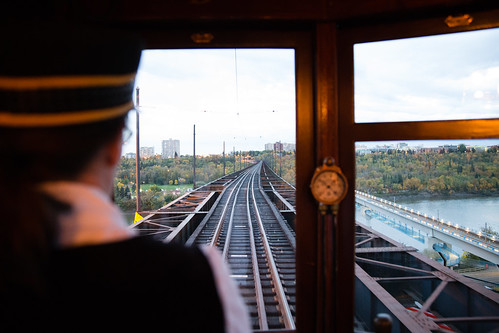
High Level Streetcar

Off we go

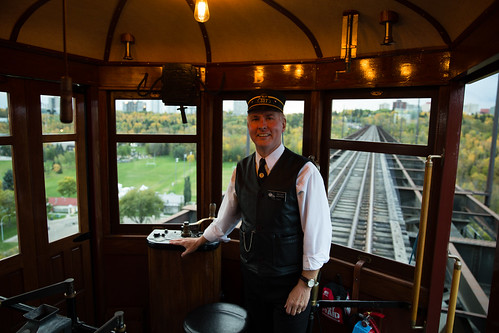
It’s been at least a year since we’ve ridden the streetcar, but every time we do, we’re reminded of how fabulous the volunteers from the Edmonton Radial Railway Society are. Hugh and Sarah demonstrated their passion and knowledge about the streetcar, and made the experience even more memorable. It’s amazing that the streetcar continues to be operated entirely by volunteers; hopefully Edmontonians never take this for granted.

High Level Streetcar

Hugh, one of the Edmonton Radial Railway Society volunteers

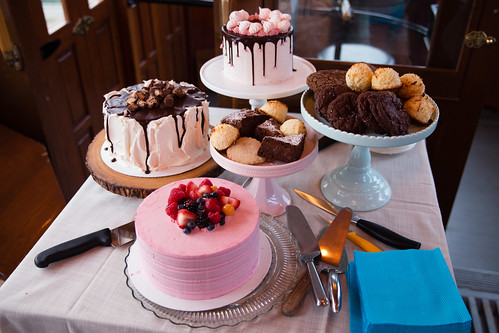
Along the way, were each treated to a generous slice of cake (the rich, dense chocolate peanut butter was delicious). If that wasn’t enough, we were each provided with a box of goodies to take home, packed with brownies, macaroons, rosemary shortbread, ginger cookies, madelines, and my personal favourite, the girls’ night in cookie with chocolate, caramel, raspberry dessert wine and coarse salt.

A Streetcar Named Dessert

Almost too pretty to eat

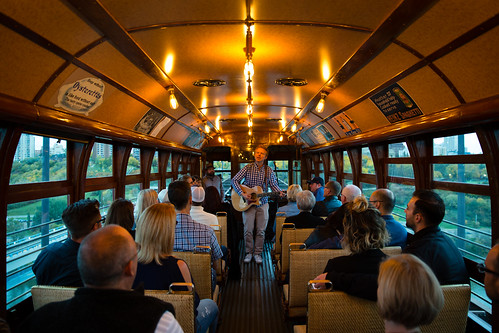
Martin played two short sets. Although Mack and I have heard him perform many times before, this was the first time we were able to learn the inspiration behind some of his songs, including one he often plays at the farmers’ market. He was well suited to this small venue, and his rendition of Hallelujah, as we sat atop the North Saskatchewan River under the darkened skies, was simply magical.

A Streetcar Named Dessert

Martin Kerr

Even before the evening was through, Amy and Jeff were already fielding questions as to whether or not they’d organize another Streetcar Named Dessert. They have, and tickets are only available in conjunction with their current Alberta BoostR campaign. Sugared and Spiced will be opening a brick and mortar bakery next spring, and are hoping to crowdfund some of the start-up capital that they need. Although they reached their first goal of $20,000 in just a few days, they’re still hoping to get to $50,000 by October 27, 2016.

Thanks to Amy and Jeff for putting together a wonderful event, and best wishes on the BoostR campaign in these final weeks!

Recap: Edmonton Culinaire Treasure Hunt

My friends Su and Allison are food scavenger hunt veterans, having competed in three previous contests in Calgary. The hunts sounded like a lot of fun, so when Culinaire Magazine (newly expanded in scope from covering Calgary to all of Alberta) announced an Edmonton treasure hunt, I jumped on board (and dragged Mack along with me).

We decided to join forces with Su and Allison so they could pass along the wisdom they’ve gained from experience. Our team also had the added efficiency of carpooling!

September 10 was a busy Saturday – one that saw the four of us start our morning at the Rogers Place open house. Although this was a chosen detour, Su and Allison hoped that Culinaire had adopted one of their recommendations from previous hunts – that clues should be distributed to the 50 odd teams at the same time for an equitable start, instead of first come, first served. Unfortunately, nothing had changed for this hunt.

Culinaire Hunt

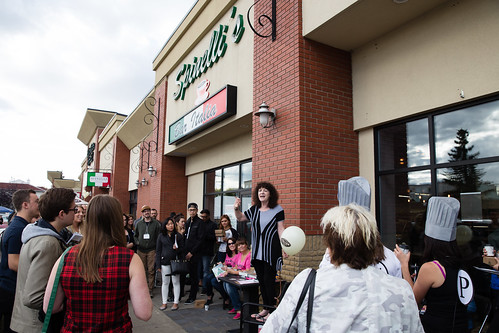
Culinaire editor-in-chief Linda Garson kicks off the hunt at the Italian Centre

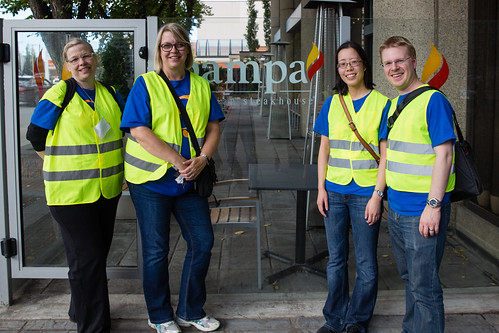
Some had really great themed costumes (I loved the team dressed to the nines in 1940s attire), but Su’s great idea was to wear our What the Truck?! shirts and vests so we could promote the last event of the year.

Culinaire Hunt

#TeamHighViz and #TeamWTT

While enjoying complimentary coffees and chocolate croissants from the Italian Centre, we settled down to solve the clues. Su and Allison recommended that we map the 30 destinations in order to plan our route, starting from the furthest out and working our way back to Pampa downtown, where the hunt would end. The Treasure Hunt regulations did express the need for a vehicle, and once we mapped everything, it was clear why – stops were as spread out at Nisku and St. Albert. Even though we decided to skip Nisku (and ran out of time before we could get to St. Albert), we ended up doing quite a bit of driving.

Fort Edmonton Park

Fort Edmonton Park was the most picturesque stop

Another requirement was a phone with internet access, which made sense for GPS purposes. However, I never expected clues that would need to be googled word for word. The most egregious of these was the following: “the latest restaurant to erupt within walking distance of the new arena.” I thought of multiple restaurants that could fit this description (“walking distance” being subjective, notwithstanding): Joey’s Bell Tower, Baijiu in the Mercer Warehouse, Buco in the Epcor Tower, Bottega on 104 Street. The answer? Bundok in Fox One, as lifted directly from one of Liane’s posts.

Culinaire Hunt 2016

Chef Ryan Hotchkiss at Bundok

At any rate, we had many favourite stops, memorable for different reasons. Canova, located just north of the Yellowhead by the train tracks, is one we would have never discovered without this activity. Formerly DeFazio Gourmet, Canova vended at the St. Albert Farmers’ Market, in addition to this retail location. The cornetti (vanilla cream-filled crescent) was delicious and one of the best things we ate all day.

Culinaire Hunt 2016

Making pedal-powered smoothies at Earth’s General Store

D’Amores Mercato was on my list to visit for some time, and this event was just the excuse I needed. I knew they had a small food service operation, but what I didn’t realize was the fact that they are well-stocked with Italian basics and frozen pasta options. The staff were also wonderful as they helped us with the challenge of crafting our own pizzas – it was the type of service that will garner return visits.

Culinaire Hunt

Making pizza at D’Amores Mercato

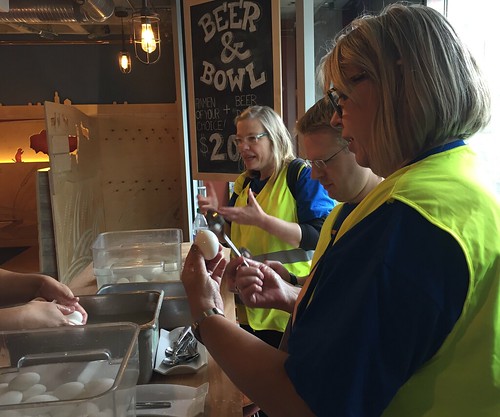
Prairie Noodle Shop put some thought into their activity that saw each one of us tasked with peeling the perfect hard boiled egg. To help us with this, we were shown a nifty technique that none of us had been exposed to before, involving a spoon to separate the shell from the white. It was a neat tip, and based on that brief interaction, Mack (who has never before dined at Prairie Noodle), remarked that he would be back.

Culinaire Hunt 2016

Learning how to peel eggs at Prairie Noodle

Some stops provided a financial incentive to return – Cured, for instance, provided a very generous $25 gift card per pair. The City Market, also hoping to lure back customers, gave each participant a $5 gift certificate. With those amounts alone, we had earned back more than half of the $65 team registration fee.

RGE RD

Allison and I are stumped at RGE RD

For the most part, establishments were mainstream in nature. It would have been great to see more ethnic establishments chosen as stops.

In case you were wondering, we made it to 25 of the 30 destinations, which wasn’t good enough to beat two teams that visited 29 locations. But in this case, we were satisfied with the journey – we had a great time with Su and Allison over the course of the day, and experienced what a culinary scavenger hunt could look like in Edmonton. Thanks to Culinaire for putting on the event, and to Su and Allison for letting us join forces!

Lazia Rebranded: Riz

While there’s no doubt the rise of Rogers Place has led to a number of new restaurants hoping to capitalize on related foot traffic, Riz Asian Kitchen is the first to rebrand in order to do so.

Lazia has been a Downtown staple for more than a dozen years, but owner Richard Lim thought it was time for a refresh. The website heralds the pedway connections between the Ice District and Edmonton City Centre where Riz is located (though to be honest, the ongoing construction in the mall might be a deterrent to some would-be patrons). Commenting that there was no better time than the present to remind diners of the space, Richard commissioned CK Designs (the same firm behind the Downtown mega bar applications) to redesign the restaurant. Given the tight turnaround time of several days, much of the same structure is intact, but the colour scheme has been muted to a palette of neutrals. In some ways, it’s now less distinctive than its other casual upscale competitors.

Mack and I were invited to enjoy a complimentary meal on September 6 when Riz opened to the public. The meaning behind the new name comes from the French word for "rice", and speaks to the fusion cuisine still present on their menu.

The menu, featuring sweeping Asian-inspired flavours from Korea to Thailand to India, does appeal to broad tastes, and includes some on-trend dishes including their interpretation of ramen. That said, they have some mainstream items on the menu, such as a basic burger and a Philly cheese steak. What does set the menu apart is the price – a majority of mains ring in under $20, making it an economical contender against the competition.

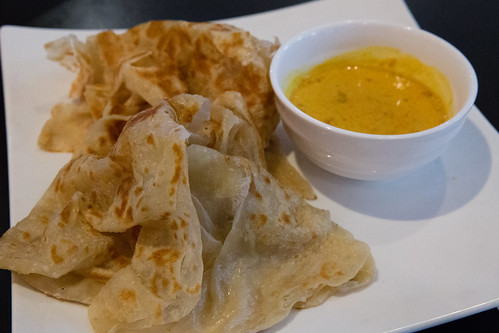
We shared the roti canai (so popular at East they had to migrate the item over to Riz), served with a curry dipping sauce.

RIZ

Roti canai

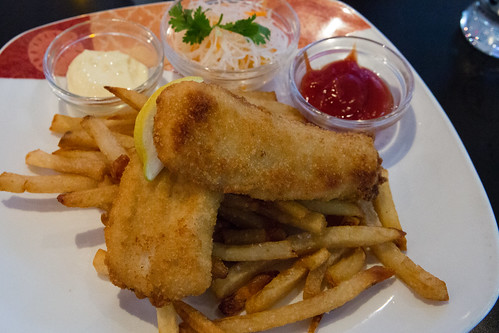
Mack’s panko-breaded Japanese fish and chips didn’t have a noticeable Asian flair, except for a disjointed slaw comprised of noodles and carrots. He enjoyed it well enough, but thought it could have more readily lived up to the cuisine that inspired it.

RIZ

Japanese fish and chips

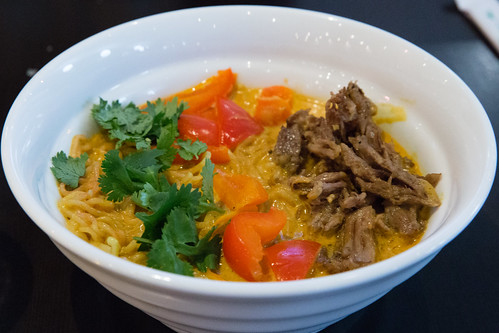
I ordered the duck curry ramen. It was a very heavy dish; I would have preferred a slightly thinner broth as I laboured to finish it by the end. The flavours were good – the confit duck was delicious and married with the curry well. The yuzu red peppers were on the tart side, but they were a welcome pop given the richness of the soup.

RIZ

Duck curry ramen

The service that evening was top notch, but given most in the restaurant that day were family, friends and media, it was somewhat expected.

Richard and his team have the experience to help draw in the crowds; only time will tell what will play well with the concert and hockey fans making the trek downtown. I wish Riz the best in the months to come – thanks again for having us!

Riz
10200 102 Ave, A113 (Edmonton City Centre Mall)
(780) 990-0188
Monday-Thursday 11am-11pm, Friday-Saturday 11am-1am, Sunday 11am-11pm

Maze Runners and Marsh Explorers: Edmonton Corn Maze and Clifford E. Lee Nature Sanctuary

It’s been six years since Mack and I last visited the Edmonton Corn Maze located in Spruce Grove. Over the September long weekend, we were looking at some outdoor attractions to explore, and it seemed like a good time as any to return.

Edmonton Corn Maze

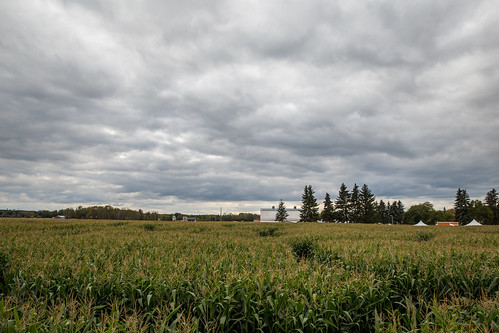
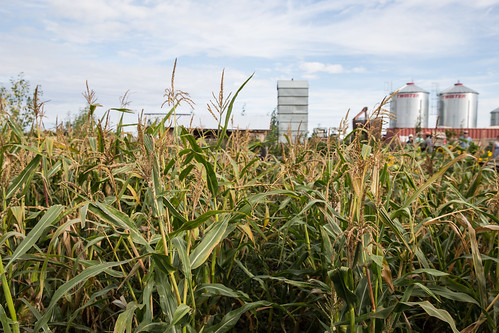
The Edmonton Corn Maze

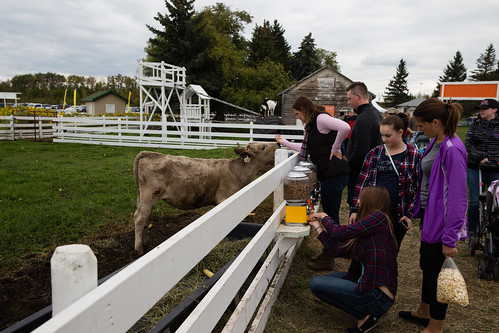
Over the past few years, the Corn Maze has grown to encompass activities outside of the maze itself, and now features a petting zoo, jumping pillows, and spud guns. We encountered more people in these areas than in the maze, so it’s definitely a place where families can spend the better part of a day. Admission has also changed in this time, likely to cover the expanded fun; in 2010, we had a Groupon offer that discounted admission to $8 for two people. In 2016, the cost is $12 per adult.

Edmonton Corn Maze

Petting zoo

A visit to the maze when the stalks are still in their prime makes a huge difference to the overall experience. I’d recommend checking it out in the next few weeks while the corn is still standing tall.

Edmonton Corn Maze

Exploring the maze

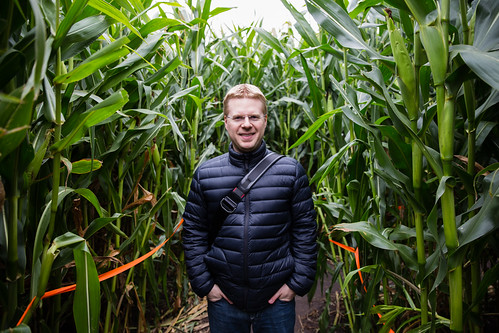
As we have in the past, we used one of the question guides to help us navigate through the ten checkpoints in the maze. Mack was annoyed that there were several errors in the Edmonton trivia (including a misspelled “Blanchford” Field and the incorrect fact that West Edmonton Mall is still the largest mall in North America), but it was all in good fun.

Edmonton Corn Maze

Mack in the maze

Never wanting to waste a trip outside of the city, Mack had looked up a nearby park just 10 minutes away from the Corn Maze in Parkland County. The Clifford E. Lee Nature Sanctuary is a 28 acre wetland preserve that is open to the public.

Clifford E. Lee Nature Sanctuary

Clifford E. Lee Nature Sanctuary

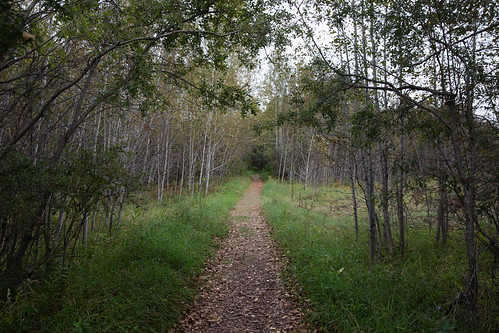
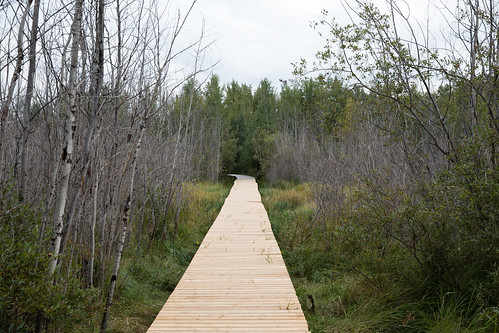
It features a combination of meadows, treed areas and marshes. Because of the marshy terrain, some of the trails are built on elevated boardwalks, making it an ideal place to walk after a rainstorm (as in, most of this summer, it seems).

Clifford E. Lee Nature Sanctuary

Elevated boardwalks

We only encountered a handful of people on our way through, and stopped frequently along the way to look for wildlife and listen for birds.

Clifford E. Lee Nature Sanctuary

A place to recharge

In many ways, this volunteer-run park is better equipped with benches, garbage cans, and a restroom than many City of Edmonton parks we visit.

Clifford E. Lee Nature Sanctuary

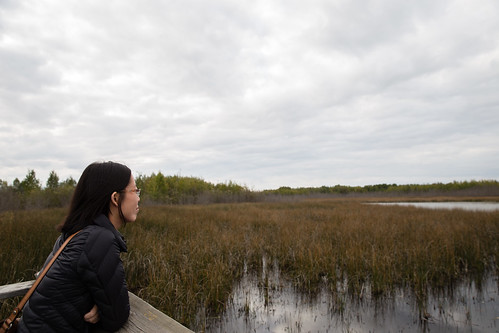
Big sky

The Clifford E. Lee Nature Sanctuary is a gem not to be missed, especially if you’re in the area!

Recap: 2016 Alberta Open Farm Days with Northlands

Last year, Mack and I were invited to enjoy a long table dinner in the evening at Northlands Urban Farm during Alberta Open Farm Days. This year, we decided to spend most of the day with them.

For just $5 per person, Northlands had organized bus tours that would visit Edmonton-area farms. Mack and I signed up for the morning tour, which featured Gold Forest Grains and Horse Hill Berry Farm.

We boarded the coach across the street from Northlands Urban Farm, joining about two dozen other people already on the bus. Quite a few of them had been on the tours led by Northlands the year prior. Although both farms we visited were open to the public that day, it was a much more efficient means of transportation to go with a group – if they decide to organize a third year of tours I can only hope even more people take advantage of this deal.

Gold Forest Grains

Gold Forest Grains

Gold Forest Grains has been a fixture at the Old Strathcona Farmers’ Market for many years. John Schneider and his family grow heritage and ancient varieties of certified organic grain on 300 acres near Morinville. Unlike other grain farmers, who typically have to farm between 2000-3500 acres, they can make it work on a smaller scale by selling directly to consumers.

Gold Forest Grains

John Schneider

Gold Forest Grains mills their own flour (they had a small hand mill on display, but most is done in large quantities now), but they offer value-added products as well. For many, their introduction to Gold Forest Grains is through their excellent pancake mix or Sturgeon River Cereal. John also mentioned that they continue to experiment with other varieties, including corn he obtained from local farmer Deb Krause that matures on the stalk, which may mean an unprecedented source for non-gmo, local cornmeal in the future.

Gold Forest Grains

Corn

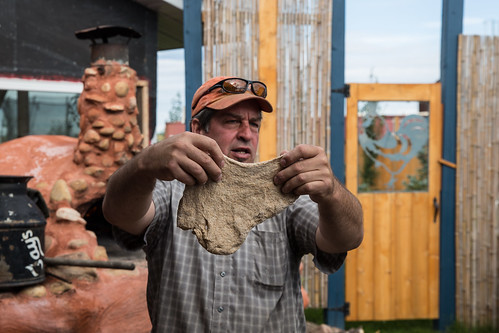
While we didn’t venture too far onto the farm, John toured us around the perimeter of their straw-bale home, featuring a small fruit garden (including heritage apples and haskaps), poultry coop, and a cob oven.

Park wheat is one of the grain varieties they grow, and John shared that he has some gluten intolerant customers that can eat this type of wheat. This is the type of flour used to make the whole wheat crust at Love Pizza. As a treat, he had put together some park wheat-based dough, which he used to fire up some focaccia in the 800 degree cob oven.

Gold Forest Grains

Park wheat focaccia

I would have appreciated it if John had also spoken about some of the other products they grow, including lentils and farro, but I recognize that we didn’t have much time.

Next up, we headed to Horse Hill Berry Farm in northeast Edmonton. Operated by Dave & Jackie Wilson, the 10 acre u-pick farm opened in 2010.

Horse Hill Berry Farm

Horse Hill Berry Farm

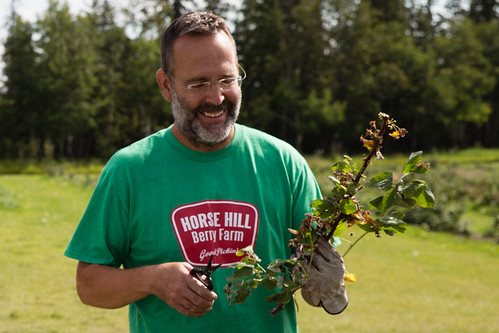
They currently offer six different types of raspberries, but have been thinking about adding other fruit. Although they are not certified organic, they do not spray their crops. They will be putting in drip irrigation (the plants require about 1 inch of water a week) and will continue to prune using machinery, though labour-intensive hand pruning is more effective. The ideal air and sunlight penetration Dave described is similar to what grape vines need to thrive.

Horse Hill Berry Farm

Dave demonstrates pruning

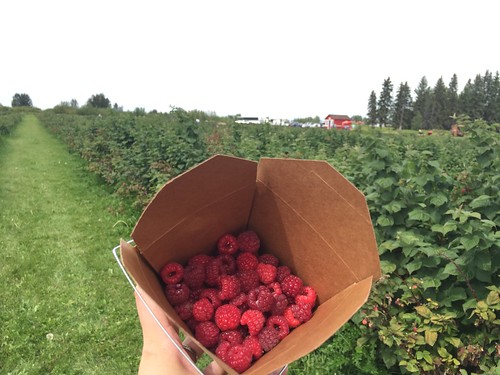
It was actually the last day of operations for the farm this year, what they termed the “bonus” week as the growing season typically only lasts five weeks. As their gift to us, we were all given a carton to fill with raspberries.

Untitled

My bounty

Until Dave mentioned it, I didn’t realize that they had deliberately planted grass between the rows to make the raspberry patch more patron friendly (so parents and kids alike wouldn’t have to worry about trekking through the dirt or mud). This, combined with their raspberry guide of the types of berries better suited for canning, freezing or wine-making, points to the thoughtful design of many aspects of their farm.

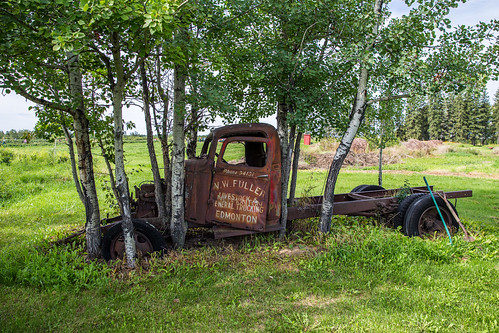
Mack and I also wandered to the look-out on the property (where you can see the North Saskatchewan River), featuring an old family heirloom. The rusted truck is also apparently a haven for snakes, which I found out first hand (it was one small garter snake, but I wasn’t expecting it).

Horse Hill Berry Farm

Family heirloom

The bus ended where we started, and by that time in the afternoon, the Northlands Urban Farm activities were up in full swing.

Northlands’ beekeeper Patty Milligan was leading a honey demonstration, and crafts and a petting zoo provided entertainment for the young ones.

Open Farm Days at Northlands

Family activities

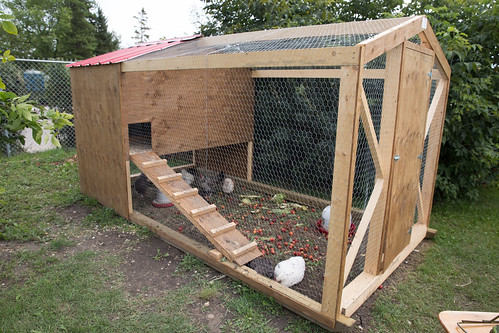
We also swung by the newly-installed chicken coop, where the heritage chicken breeds were happily picking at apples and greens.

Open Farm Days at Northlands

Northlands’ chicken coop

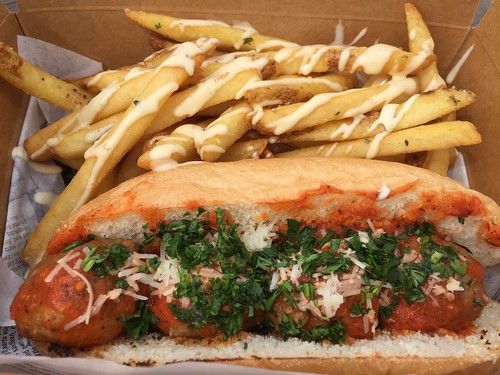
Before we left, we had a bite to eat from the Northlands 1879 food truck, and regretted choosing to share the garlic fries instead of ordering our own.

Untitled

Meatball sub and garlic fries

Thanks to Northlands for organizing an economical and seamless way to visit a few of the region’s farms – check out the Alberta Open Farm Days website for more ideas next August on how you can meet some of our rural neighbours.

Let Your Garden Grow: Workshop Eatery

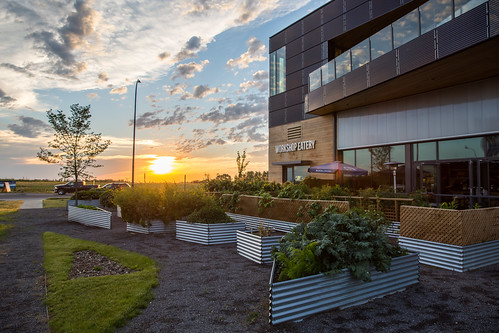
Given it was far from the growing season during our last visit, Mack and I knew we wanted to return some time to see the gardens outside Workshop Eatery in their full splendor. The occasion came up when Mack’s parents were in town in early August, and we were looking for some place special to take them.

Workshop Eatery

Workshop Eatery

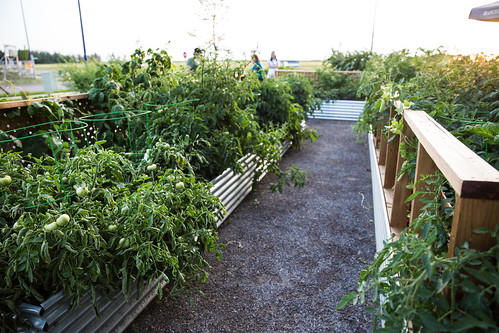
We spent some time wandering the raised beds, admiring the variety and abundance. I’m not sure I would have predicted just how much they could grow outside their front door! There are few restaurants in Edmonton that can say they have access to fresh produce within arm’s reach. Make sure to follow along on Instagram if you’re curious as to the day’s garden haul.

Workshop Eatery

Abundant garden

At any rate, the restaurant was nearly full on a Friday night. Even though the patio was beckoning on that warm summer evening, the floor to ceiling windows made the dining room a very pleasant setting. Equally lovely was our personable and polished server – she ensured all of our needs were taken care of in a warm and professional manner.

We started by sharing the daily arancini ($12 for 3), which on that night was made with ham and peas, and served with a fun sriracha and brown sugar sour cream. The arancini were a hit around the table, crispy and well seasoned.

Workshop Eatery

Ham and pea arancini

My miso glazed ling cod ($28) was prepared well, and I loved the textures of the bok choy, carrot ribbons and baby potatoes. The shiitake broth was a nice base, but if intended to be consumed on its own the salt should have been toned down somewhat.

Workshop Eatery

Miso glazed ling cod

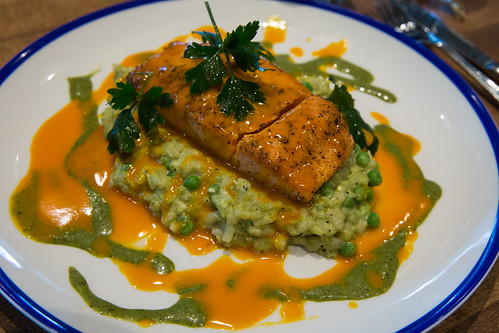
Mack’s main combined two of his favourite things: salmon and risotto ($29). He had no complaints, and dispatched the plate in no time at all. On a side note, it’s unusual to see a restaurant offering three fish options on a regular menu (there was also a halibut). But Mack and I both appreciated this – more often than not, we have to fight over who can order the fish.

Workshop Eatery

Pan roasted salmon

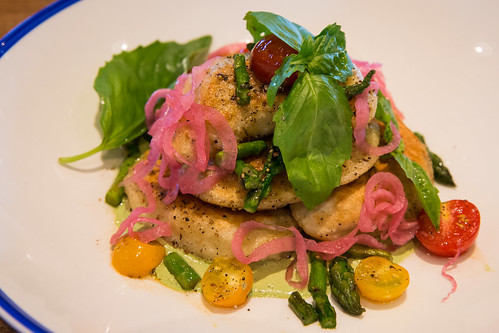
Martin and Patti enjoyed their dishes as well – Martin, swayed by the accompanying gnocchi, had chosen the chicken supreme ($28). Patti ordered the potato and goat cheese perogies ($24), topped with roast tomatoes, asparagus, pickled onions and basil creme fraiche.

Workshop Eatery

Chicken supreme

Workshop Eatery

Potato and goat cheese perogies

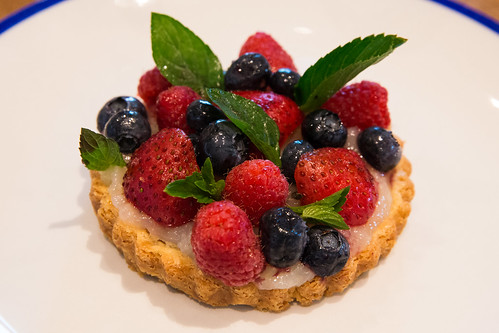
Dessert couldn’t have been more photogenic – a cream and berry tart ($10), with a loose lemon curd topped with fresh berries and mint.

Workshop Eatery

Summer berries and cream tart

It was great to see Workshop flourishing as well as their garden. They’re already starting to change up their menu for the fall – so make sure you get there soon if you’re hoping for a taste of our dwindling summer!

Workshop Eatery
2003 91 Street SW
(780) 705-2205
Monday-Wednesday 11am-10pm, Thursday-Friday 11am-11pm, Saturday 10am-3pm and 5-11pm, Sunday 10am-3pm and 5-9pm

Recap: 2016 Grand Taste Tour with Northlands Urban Farm, Brix ‘N Berries, Triple M Dairy and Tangle Ridge Ranch

At the end of July, Mack and I were honoured to be asked to be among the hosts of the third annual Grand Taste Tour. It was the second year of the event where attendees were bussed to the various farm locations, as opposed to a self-guided tour. This allows participants to meet and break bread with other folks interested in learning about local agriculture, all while taking advantage of more efficient group-based transportation.

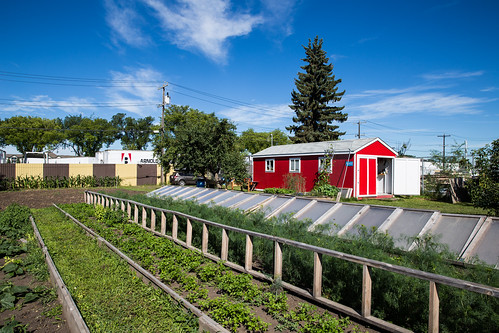
Linda and Brittney headed up one bus, while Mack and I led another. The first stop was within city limits – a one acre lot cultivated in partnership with Northlands. The farm is a part of the Northlands Urban Farm, intended for educational purposes and to support innovative practices. 600 students from local schools have already toured the farm this year, and 26 children will be selected to take part in their junior beekeeping pilot this fall. Northlands also successfully applied for an urban chicken permit which will allow them to add eight hens to the property.
Grand Taste Tour 2016

Northlands Urban Farm

We spent some time with Travis Kennedy of Lactuca, whose crops make up most of the one acre. His enthusiasm and pragmatism make him a wonderful urban agriculture ambassador. While Lactuca began its business in a backyard garden, it now has the chance to produce 200-300 pounds per week at Northlands. New challenges have come with that opportunity in the form of supply exceeding demand, so much of his focus this year has been on developing new markets for their products. Lactuca currently supplies to 15 restaurants in Edmonton and area, including Farrow and Three Boars.
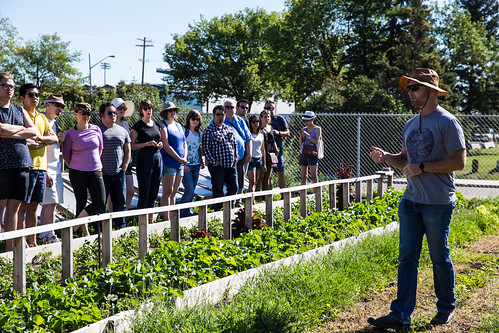
Grand Taste Tour 2016

Travis

Salad greens (primarily kale, lettuce and arugula) make up most of the crop. The reason these were chosen relates to their short 7 day production cycle to make the most of Edmonton’s 100 growing days, their lightweight nature (Travis used to transport his crop to farmers’ markets on a bicycle), and that all restaurants have a salad on their menu, increasing his market potential. That said, greens require an incredible amount of water to flourish – on hot days, Lactuca can use up to 7000L of water. Northlands was permitted to run below-ground water lines to help with this.

Although Lactuca does experiment with other crops (corn and French fillet beans, to name a few), they’ve embraced salad greens because they want to stay true to seasonality. They haven’t ruled out hydroponics in the future though, so stay tuned!

Lactuca relies on organic practices, using City of Edmonton compost, and Travis doesn’t mind the holes he finds among the leaves. He believes it speaks to their terroir and lack of pesticide use. That said, he recognizes that what may sell to consumers at a farmers’ market will not pass inspection with restaurants (pointing out the odd dichotomy between the success of “ugly produce” campaigns and the unchanged expectations of diners eating out).
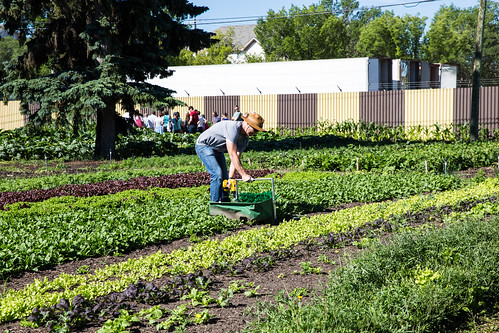
Grand Taste Tour 2016

Demonstrating the drill-powered harvester

I was particularly amazed by the method in which they now harvest their greens. When Travis started, they relied exclusively on hand-harvesting, which is laborious and time consuming. They’ve since moved to using a drill-powered aluminum harvester, which can harvest up to 150 pounds an hour.

The group then listened to Patti Milligan, who is the beekeeper for urban hives at Northlands and the Shaw Conference Centre.

The hives at Northlands are kept primarily for educational purposes. Patti explained that Alberta is the largest honey producer in the country, due to the abundance of sunlight and flowers. In our province, clover, alfalfa and canola dominate, but Patti did mention a movement towards manipulating where bees go through timing of blooms and placement of plants. She said we should watch out for locally-sourced borage, raspberry, fireweed, and dandelion honeys in the near future.

Grand Taste Tour 2016

Patti

It’s great to have such a rich resource centrally located in Edmonton, available for children and adults alike to learn about agricultural practices, especially when it is helmed by passionate connectors like Travis and Patti. Northlands is offering free public tours on September 10 – pre-registration is required.

Our second stop took us just outside of city limits to Brix ‘N Berries in Leduc County. Operated by Greg Moline and Laurie Erickson, Brix is primarily a berry u-pick garden, though they also offer limited vegetables as well.

Greg and Laurie do have off-farm income – their main work is in the area of soil amendments, assisting farmers who are looking to transition from using fertilizers to relying on other practices. They highlighted the difference between great soil and poor soil on their own land – a portion of their farm has naturally enriched number one grade soil (where they joked that seeds germinate even before they hit the ground). The Saskatoon bushes here grew without restraint, full and unwieldy. Across the field, bushes planted in the same year in sub-par soil struggled to fruit, branches spotty and inconsistent.
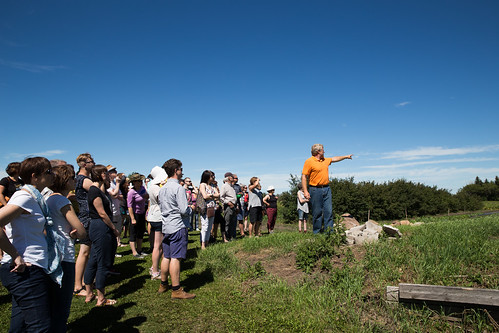
Grand Taste Tour 2016

Greg points out the number one grade soil

Brix began with 50 acres of Saskatoons, but soon added strawberries, raspberries, a greenhouse, then a market garden. Greg shared that it has been challenging for operations like theirs to stay in business without an agri-tourism component such as Prairie Gardens. Brix doesn’t charge an overhead for consumers to pick their produce because they just focus on growing food, and perhaps because of that, they can’t keep up with the demand. In the face of several other u-picks that closed this year (Roy’s Raspberries on a permanent basis and Happy Acres for 2016), Brix has had to close from Sundays to Tuesdays this season to allow the fields to regenerate. Even then, that previous Wednesday, they found that 250 people picked the field clean in a day.
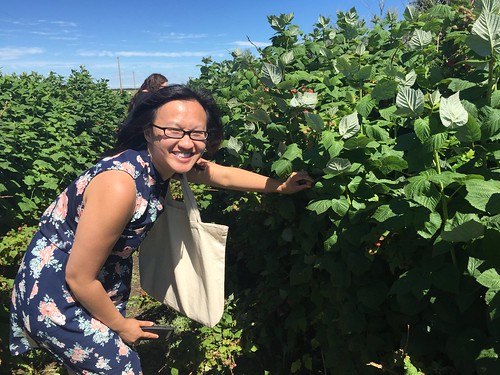
Brix 'N Berries

Linda picks some raspberries

My sisters and I, city children through and through, benefited from the u-picks we visited with our parents growing up. I’m not sure I would have been able to identify field-grown produce as a kid without those experiences, and through the relationship we had with the farmers, learned to appreciate how difficult it was to grow food for the masses. With development pressures and the work involved in maintaining a public farm, I’m sure more of these operations may fall by the wayside, but I really do hope the tide turns – these u-picks are a valuable community asset for the next generation.

Our third stop was Triple M Dairy in Calmar. Genzinus Martins runs the farm along with his sons, comprised of 180 cows. Considered a medium-sized operation, they produce 1.3 million litres of milk per year sold through Alberta Milk.

Mack and I were fortunate to have toured Bles Wold a number of years ago, and had already seen an example of a mechanized milking machine. For many on our bus however, this was their first encounter with a machine that can milk up to 60 cows per hour. The technology also monitors the health of an individual cow through a transponder in their neck, tracking their production over a period of time. Most animals supply 40L of milk per day.

Grand Taste Tour 2016

Genzinus explains how the milking machine works

Genzinus was proud of their operation, as they are constantly striving to improve the health of their cows and ensuring the animals continue to produce for 4-5 years. Their cows get a two month break from milking every 12-13 months to wander the fields. He emphasized that Alberta Milk provides incentives for better quality milk, so farmers aren’t just driven by quantity alone.
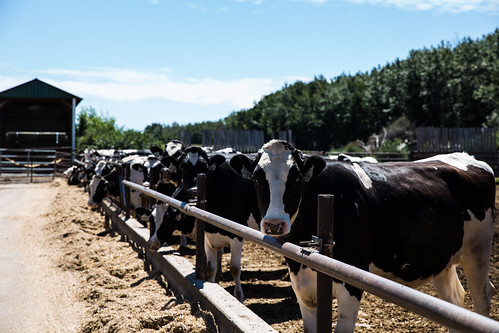
Grand Taste Tour 2016

What are you looking at?

Our last stop was Tangle Ridge Ranch located in Thorsby. Vicky and Shane Horne are first generation farmers, and when they purchased 60 acres they knew they wanted to have a strong connection with consumers. Although they had experience with cattle farming, they wanted to start out with smaller animals, and thought they could find a niche with grass-fed lamb, a product not widely known in Alberta. 50% of lamb sold in the province is imported, something Vicky and Shane hopes will change in the years to come.
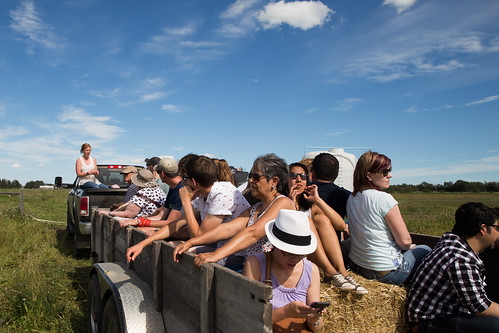
Grand Taste Tour 2016

The best kind of tour!

Vicky and Shane carefully selected the breeds of sheep they would raise. Katahdins and Dorpers are “hair” sheep that naturally lose their coats and thus don’t require regular shearing, with their energy going into meat instead. Without wool, believed to produce lanolin oil, the meat from these sheep breeds are much milder in flavour. Currently, Tangle Ridge raises 70 sheep per season, but want to eventually grow to a flock size of 250. They sell direct to consumers every fall through their website, and are now taking orders for November 2016.
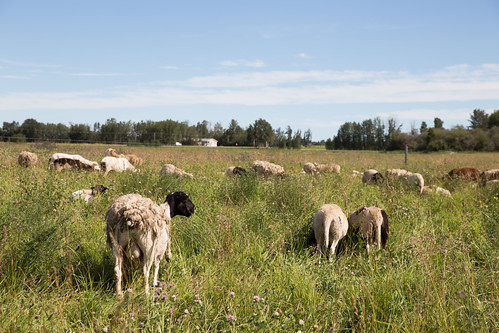
Grand Taste Tour 2016

Hair sheep

The foundation of their farm is pasture management, as they believe healthy soil is the key to healthy animals. They seeded their land with a mix of alfalfa and clover, and manage with temporary fences for rotational grazing. A portable water truck follows the flock so the animals always have access to water.

The story of Tangle Ridge Ranch wouldn’t be complete without mentioning their dogs. Virgo, Mojito and Bailey protect the sheep, circling them night and day to deter the coyotes in the area.
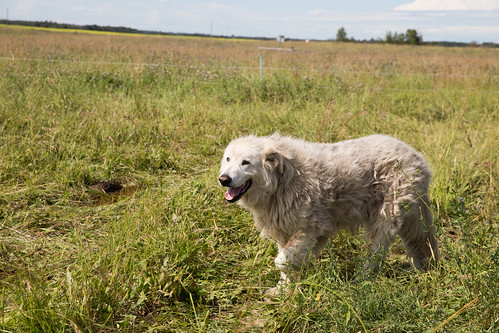
Grand Taste Tour 2016

A sheep dog in his element

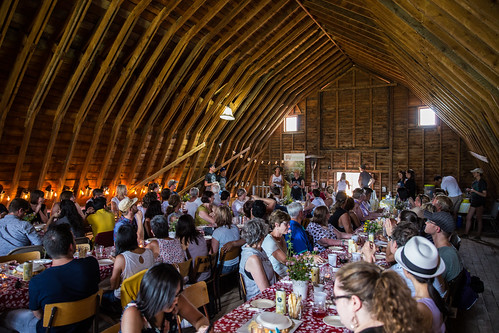
After the tour, all guests were ushered onto the second floor of the barn on the ranch. It’s been transformed into an event space that’s used for long table dinners and private functions. With the overhead lights and mismatched chairs, it was a rustic setting that befit the closing of the day.
Grand Taste Tour 2016

Barn dinner

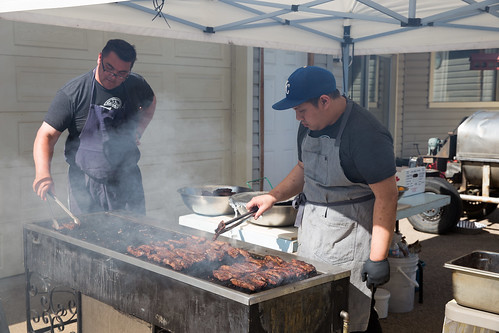
The food is where the Grand Taste Tour sets itself apart from other farm-related events. Whereas other events focus on either tours or meals alone, Grand Taste successfully marries both for an unmatched value. Last year, they brought in Chef Daniel Costa of Corso 32 fame. This year, not to be outdone, Chef Frank Olson from the Red Ox Inn and Canteen prepared a six course meal utilizing ingredients from producers we had met along the tour. This was also the first year where alcohol was available for purchase at dinner.
Grand Taste Tour 2016

Chef Frank Olson and crew cooking up a storm

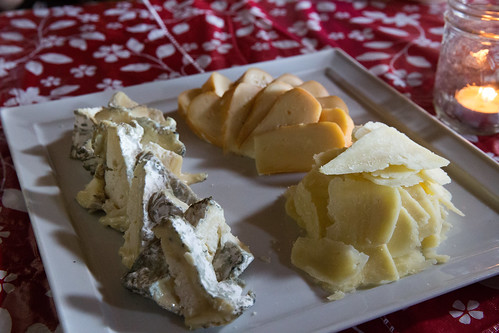
To start, we sampled three Winding Road cheeses, accompanied by a compote made from Brix ‘N Berries cherries, and Coal Lake Honey. Winding Road is a small cheesiry that began selling its products at the French Quarter Market this year.
Grand Taste Tour 2016

Winding Road cheeses

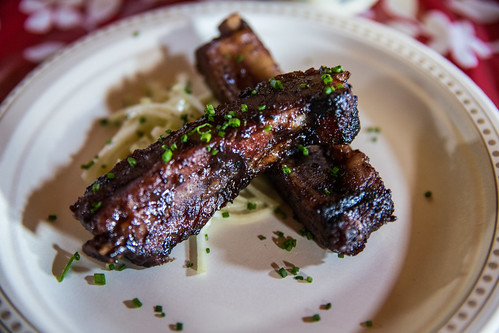
Pork ribs glazed with a Saskatoon berry barbecue sauce with an underlay of kohlrabi were up next, food meant to get your hands dirty.
Grand Taste Tour 2016

Pork ribs

Lactuca and Sundog Organic supplied the vegetables in the salad course, made up of radishes, greens, carrots, pumpkin seeds and a green goddess dressing.
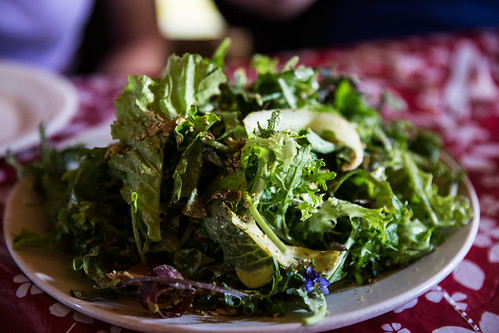
Grand Taste Tour 2016

Green goddess salad

My favourite dish was the gnocchi, served with basil and tarragon from Reclaim Urban Farm, pecorino from The Cheesiry, and peas from Erdmann’s. Selfishly, I was thankful this had been served family-style, as some of my dinner companions chose not to eat their full share.
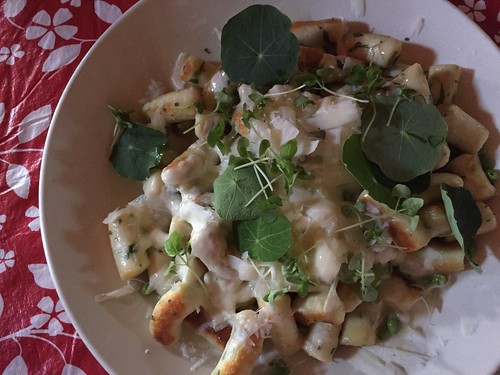
2016 Grand Taste Tour

Gnocchi

Many had been awaiting the main course – Tangle Ridge lamb was served two ways: cumin-scented meatballs, and slow roasted for 8 hours with horseradish and nettle. Perhaps it was the knowledge from the tour, but the meat was noticeably mild in flavour, outside of the spices imparted by the kitchen.

Grand Taste Tour 2016

Lamb served two ways

As if we weren’t full enough, the dessert course was too good to pass up, a glorious canola oil cake dolloped with whipped cream and Brix ‘N Berries raspberries.
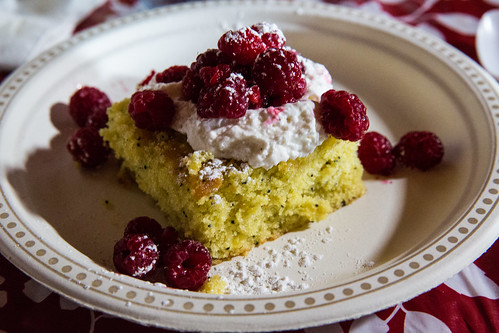
Grand Taste Tour 2016

Canola oil cake

Thanks again to Kirsta, Amy and the rest of the Grand Taste Tour organizers for a fantastic day full of learning and great food. I’m looking forward to next year already.

Iberian Flavours: Sabor Seafood Festival

While Edmonton is still firmly regarded as beef country, there’s been a rise in the profile of seafood in our land-locked city. With better access to airlifted catch, seafood-focused restaurants such as The Black Pearl offer a rotating menu of fresh options, and home cooks can have their pick of Icelandic fish caught two days earlier from Ocean Odyssey. Closer to home, Effing Seafoods made a splash this year with a number of collaborations and pop-ups with local restaurants showcasing their Canadian sourced seafood.  
As such, Sabor has been ahead of the curve, as they are onto their third annual Seafood Festival this year. The festival highlights Sabor’s ongoing partnership with Ocean Wise, a conservation program operated by the Vancouver Aquarium that promotes sustainable seafood through education. You may have already encountered their fish head symbol on local menus, which denotes that the seafood used in that dish is considered ocean-friendly (for those who want to learn more about the subject, I’d recommend Taras Grescoe’s Bottomfeeder). Some quick facts:

  • 85% of the world’s assessed fish stocks are currently over-exploited or at full capacity
  • 4 or every 10 fish caught are bycatch
  • 91% of Canadians want their seafood to be sustainable but only 11% buy sustainable seafood every time they shop

This year’s festival runs August 5 – September 3, 2016, and features a wide range of seafood. A few weeks ago, I was fortunate enough to be invited to preview the festival menu as a guest.

Unlike previous years, Sabor Chef Lino Oliveira collaborated with Calgary-based Chef Jan Hansen of Hotel Arts for the dinner, and we learned that Chef Jan is originally from Edmonton! The collaboration also took Chef Lino down to Calgary to host a dinner at the Kensington Riverside Inn in early August. It’s always great to see chefs working together, particularly across cities.

The supper was served family style, and over the course of the evening, we sampled a variety of tapas and mains. Through his choice of flavours and cooking techniques, Chef Lino transported us to the Iberian coast.

Though not featuring seafood, I loved the heirloom tomato & queijo fresco montadito, a bruschetta-like serving of fresh market tomatoes and Portuguese cottage cheese atop Chef Jan’s bread.

Sabor

Tomato and fresh cheese crostini

Another standout was the meaningfully messy gambas al ajillo, featuring BC spot prawns almost comically large in size. Chef Lino delighted in his recommendation to imbibe in the juices inside the head as well.

Sabor
Shrimp

Even the surf & turf had a Portuguese twist: a charred octopus served alongside a chorizo-stuffed lamb that had been rolled in caul fat and cooked sous vide for three and a half hours.

Sabor

Portuguese surf & turf

My favourite dish of the elaborate menu was the Caldeirada de peixe, a sablefish (black cod) served in a saffron-lobster broth. The skin had been perfectly crisped, and all I wanted to do was make sure the rest of the broth didn’t go to waste (even if it meant throwing decorum out the window).

Sabor

Sablefish in saffron-lobster broth

Although the final dishes that ended up on the Seafood Festival menu are slightly different, the ingredients, flavours and combinations are very similar to what we tried that evening. 

Thanks again to Sabor for a wonderful evening of food and hospitality! The Seafood Festival runs August 5 – September 3, 2016.

Check out Andrea, Cindy and Linda’s snapshots of the evening.